01What Is Venetian Plaster?
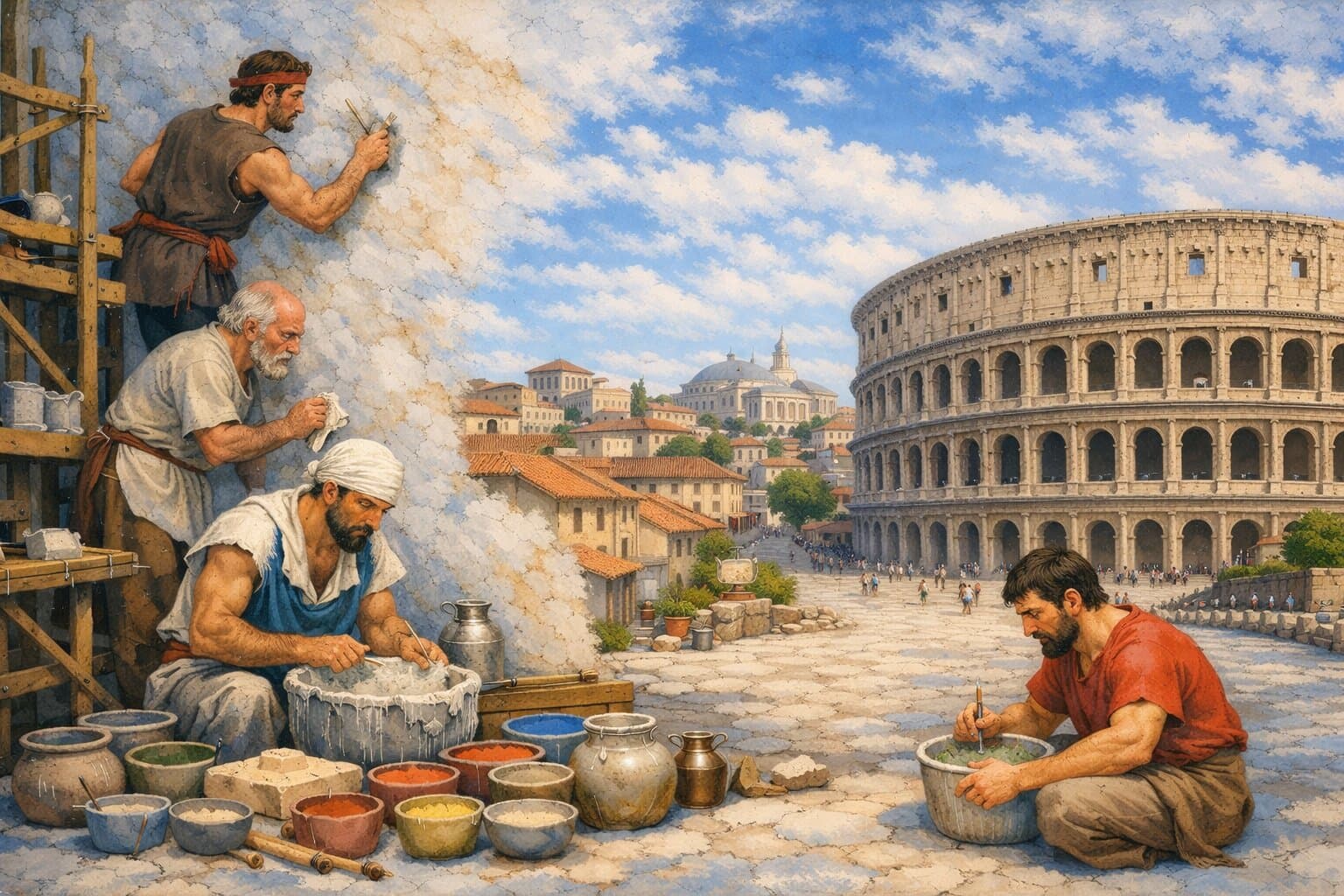
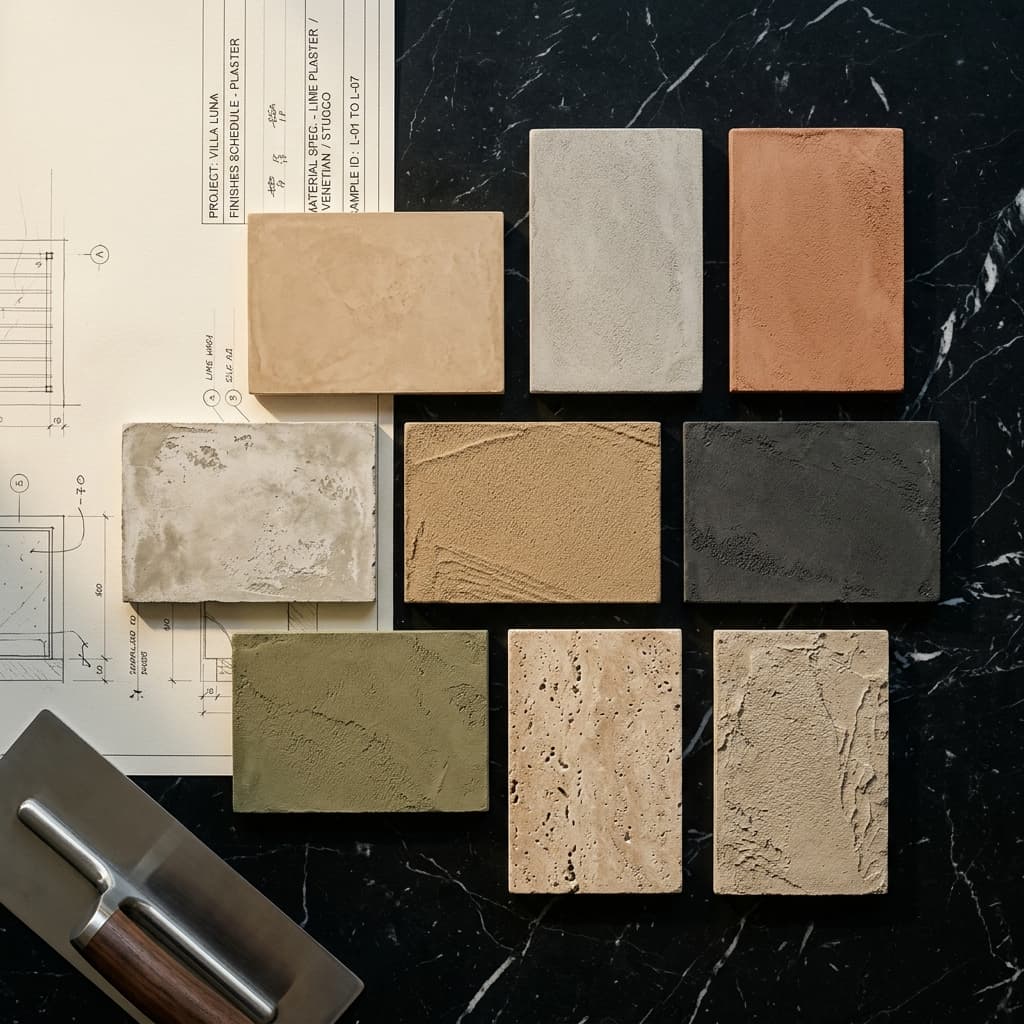
Venetian plaster — known in Italy as intonaco veneziano or stucco veneziano — is a traditional lime-based wall finish that dates back to ancient Rome and reached its artistic peak during the Venetian Renaissance. It is made from three primary ingredients:
- Aged lime putty — calcium hydroxide that has been slaked and stored for months to years
- Marble dust — fine crystalline aggregate that gives the finish its depth and luminosity
- Natural pigments — mineral-based colorants that won’t fade under UV exposure
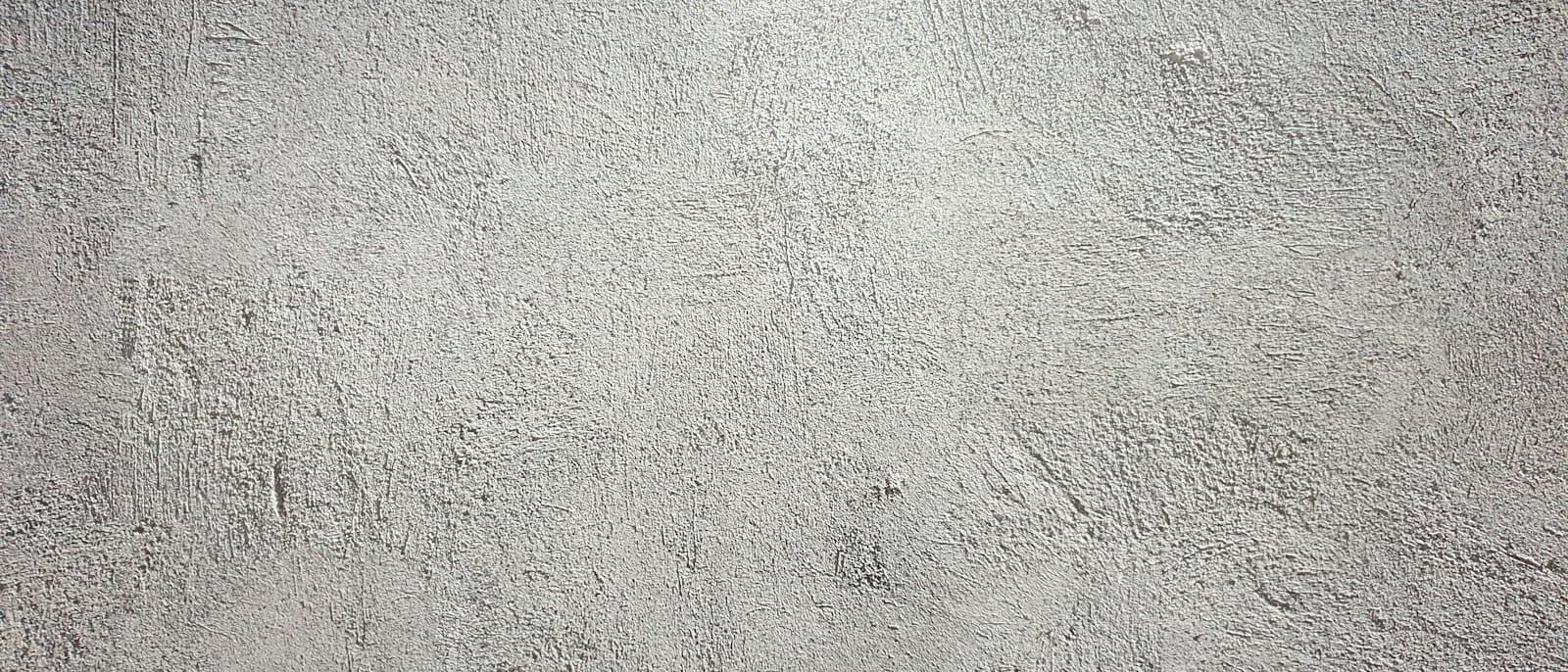
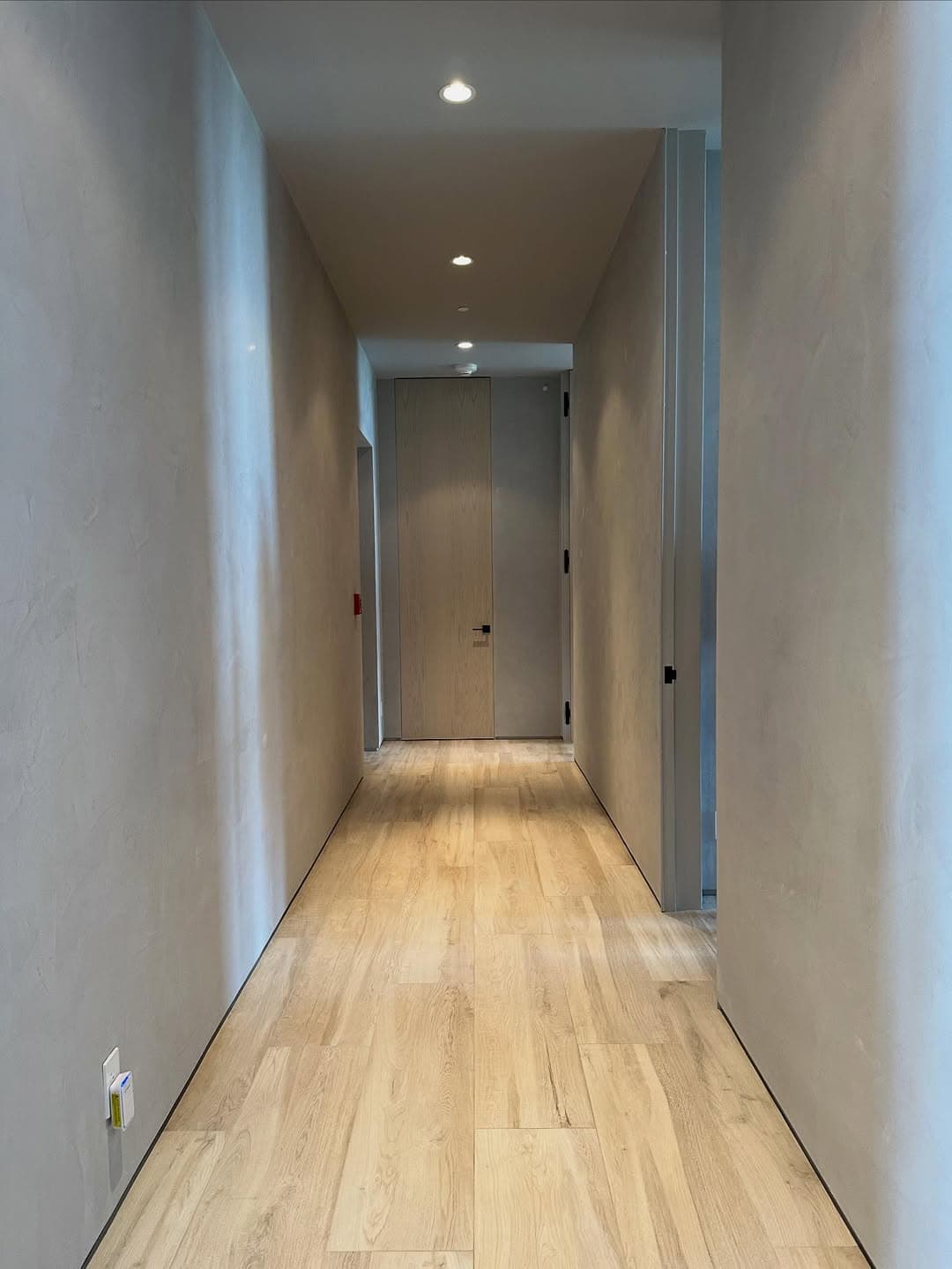
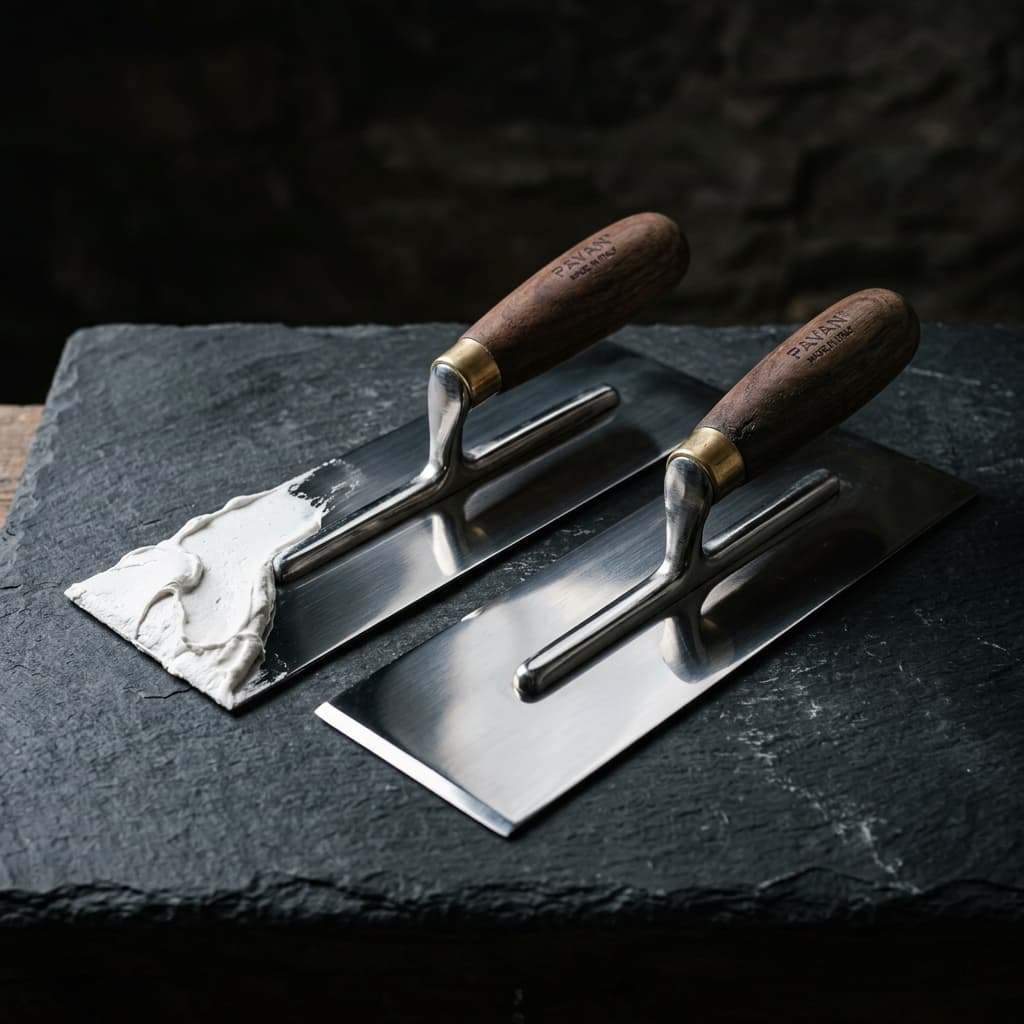
Unlike paint, which sits on the surface of a wall as a thin film, Venetian plaster becomes part of the wall itself. Each layer is troweled on thinly, then compressed and burnished with a stainless steel trowel. The compression closes the surface, creating a dense, marble-like finish with depth, movement, and light reflection that no paint can replicate.
The Chemistry Behind the Finish
When lime putty is exposed to air, it undergoes a process called carbonation — it absorbs carbon dioxide and slowly converts back into calcium carbonate (limestone). This is why Venetian plaster hardens over time. The longer it cures, the harder and more durable it becomes. A properly applied Venetian plaster wall can last decades — often outliving the drywall behind it.
Gloss Levels: From Matte to Mirror
Venetian plaster can be finished at multiple sheen levels depending on how much burnishing is applied:
- Matte — soft, chalky, and understated
- Satin — subtle sheen with gentle light movement
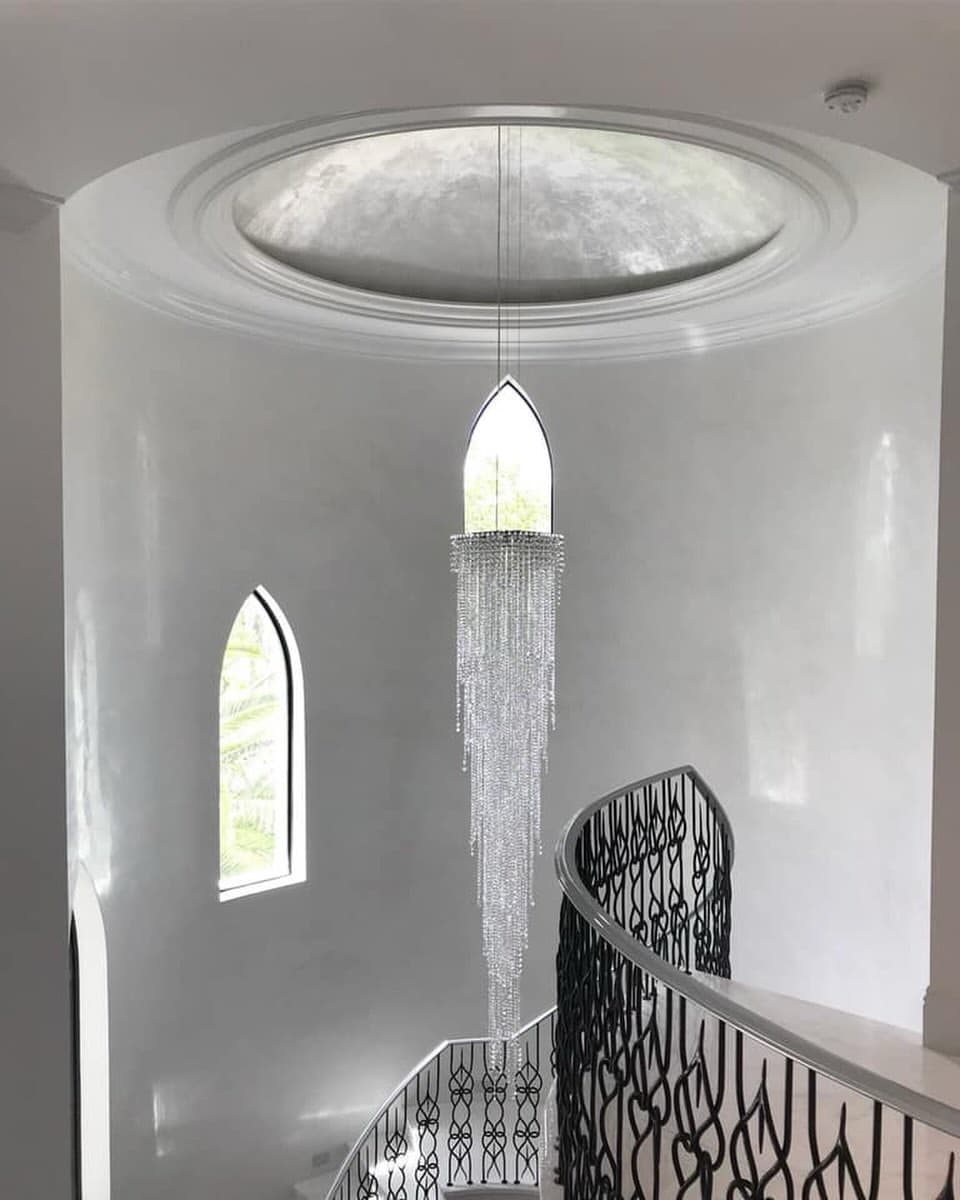
- Polished — high-gloss, mirror-like reflection
- High-gloss (Grassello) — maximum burnishing, near-glass finish
Each level requires a different trowel technique and a different amount of time on the wall. High-gloss finishes take significantly longer to achieve and are priced accordingly.