Novacolor Global Ambassador (2017)
Gian Carlo Sagasti was named a Novacolor Global Ambassador in 2017 — a designation granted to a small number of artisans worldwide who demonstrate exceptional mastery of lime-based finishes.
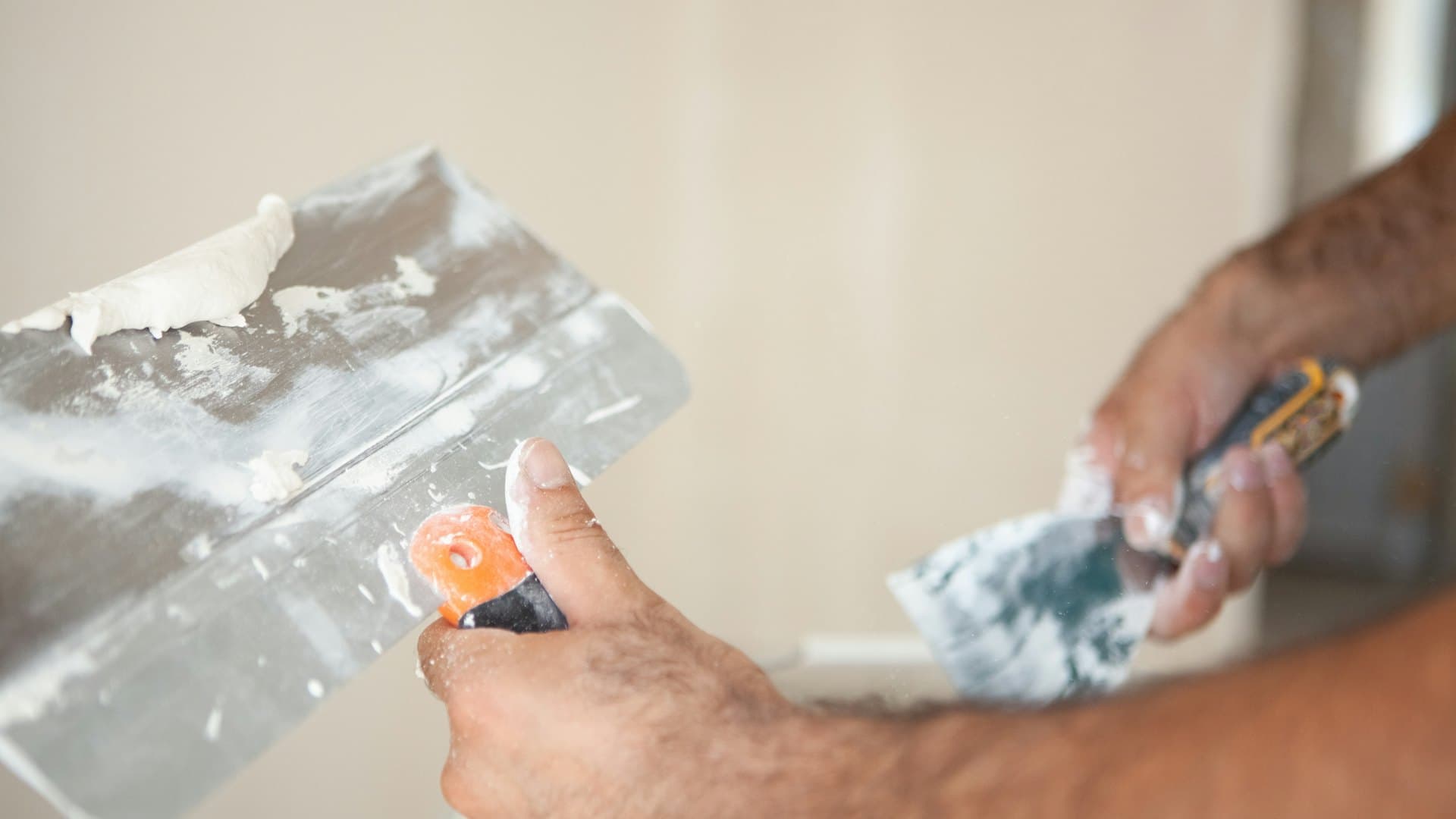
Venetian plaster is not a painting job. It is a trowel craft, and the gap between a skilled applicator and an unskilled one is visible on the wall for the next twenty years. The finish cannot be corrected with a second coat — a poorly burnished wall has to be ground back and rebuilt.
That makes choosing the applicator the single most important decision in the project, ahead of brand, colour, and price. Most people searching for a local Venetian plaster applicator have no way to tell a master artisan from a drywall contractor who bought a bucket of lime putty, because both use the same words in their advertising.
This page explains what the job titles actually mean, the questions that separate the two, and what qualified work costs. Written by Gian Carlo Sagasti, a Novacolor Global Ambassador (2017) who has worked with Italian lime finishes since 2003.

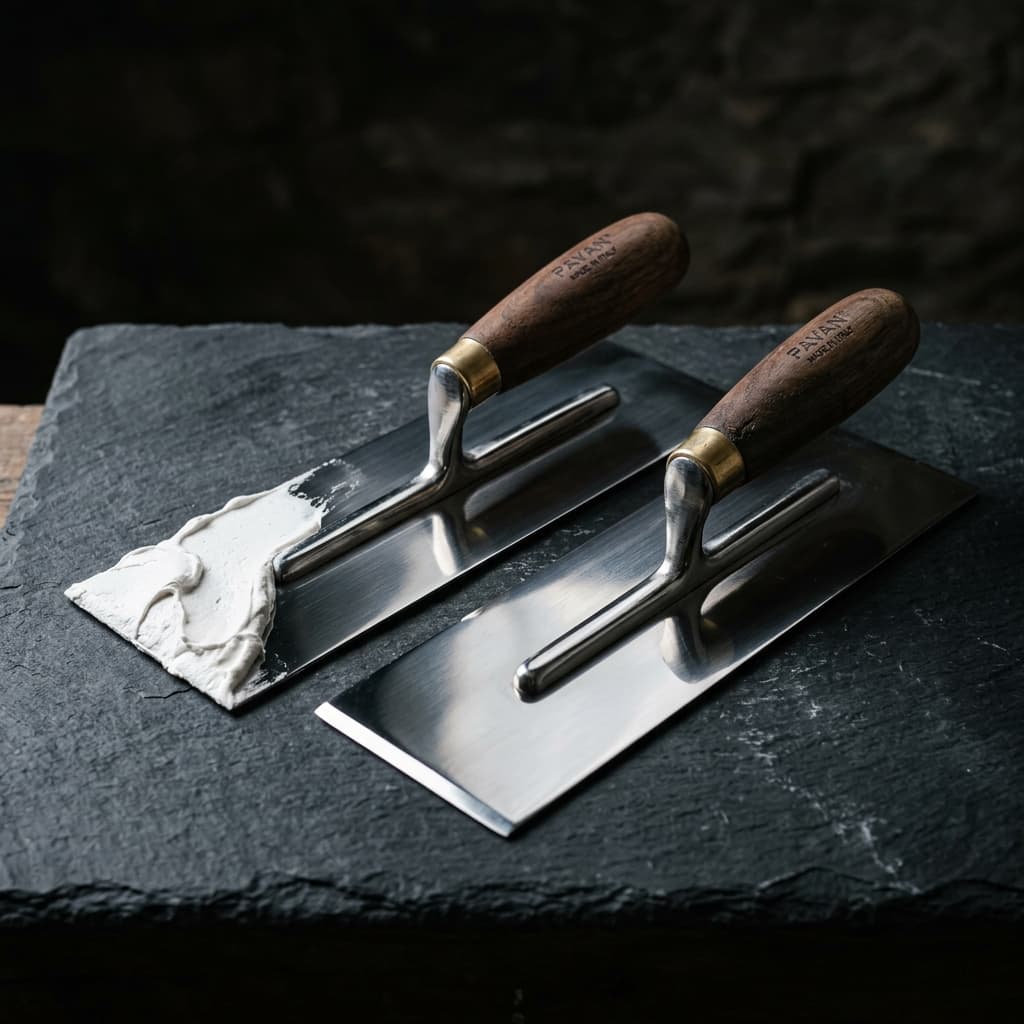
An applicator is not applying a coating. They are building a surface in thin layers and then compressing it — the sheen comes from burnishing the lime with a steel trowel at exactly the right stage of cure, not from a product in a can.
The skill sits in three places, and none of them can be rushed:
None of this is visible in a photograph taken straight on with flat lighting, which is why a portfolio alone is not enough to judge an applicator. See how to judge a sample board below.
Search results mix a dozen job titles that are used loosely and often interchangeably. None of them is a protected term, and none of them is a qualification on its own. Here is what each one usually signals and what to verify before you take it at face value.
| Title you will see | What it usually means | What to verify |
|---|---|---|
| Venetian plaster contractor | The broadest term. Ranges from a master artisan to a general contractor subcontracting the work out. | Who physically holds the trowel on your job — the person you are talking to, or a crew you have not met. |
| Artisan plaster installer | Positions the work as a craft rather than a trade. Usually a small studio or an individual. | Years working specifically with lime, not with drywall or standard stucco. |
| Polished plaster applicator | Focused on burnished, high-sheen finishes. Often a genuine specialist. | Sample boards at the exact sheen level you want, not a general portfolio. |
| Master decorative plasterer | “Master” is self-declared in the US — there is no licensing body behind it. | The specific credential behind the claim: manufacturer certification, ambassadorship, published work. |
| Marmorino installer studio | Specialises in matte, stone-like lime finishes. | That they also handle the polished finishes if your project mixes both. |
| Italian stucco applicator | Signals authentic Italian materials — or is simply marketing language. | The actual manufacturer and product line being quoted. |
| Architectural plaster firm | Commercial-scale, works from specifications and submittals. | Whether they take residential work at your project size. |
| Commercial plastering company | Volume work — hotels, retail, offices. Crew-based. | Who supervises on site and whether finish quality is consistent across the crew. |
| Residential decorative plasterer | Homes and condos, typically smaller crews. | Insurance, and experience with occupied-home dust and access control. |
| Luxury wall finish specialist | Positioning term for the high end of the market. | That the price premium maps to demonstrable skill, not just branding. |
| Custom wall texture contractor | Often closer to painting and texturing than to lime plaster. | Whether they work in real lime putty at all, or in acrylic texture products. |
| Microcement floor contractor | A different material and a different trade to lime plaster. | Separate, dedicated microcement experience — the two skills do not transfer. |
| Venetian plaster workshop studio | Usually teaches as well as applies. | That they still take client projects and are not primarily a training business. |
A title tells you how someone markets themselves. The questions in the next section tell you whether they can do the work.

Ask these before signing anything. A qualified applicator will answer all ten without hesitation, and will usually volunteer most of them unprompted.
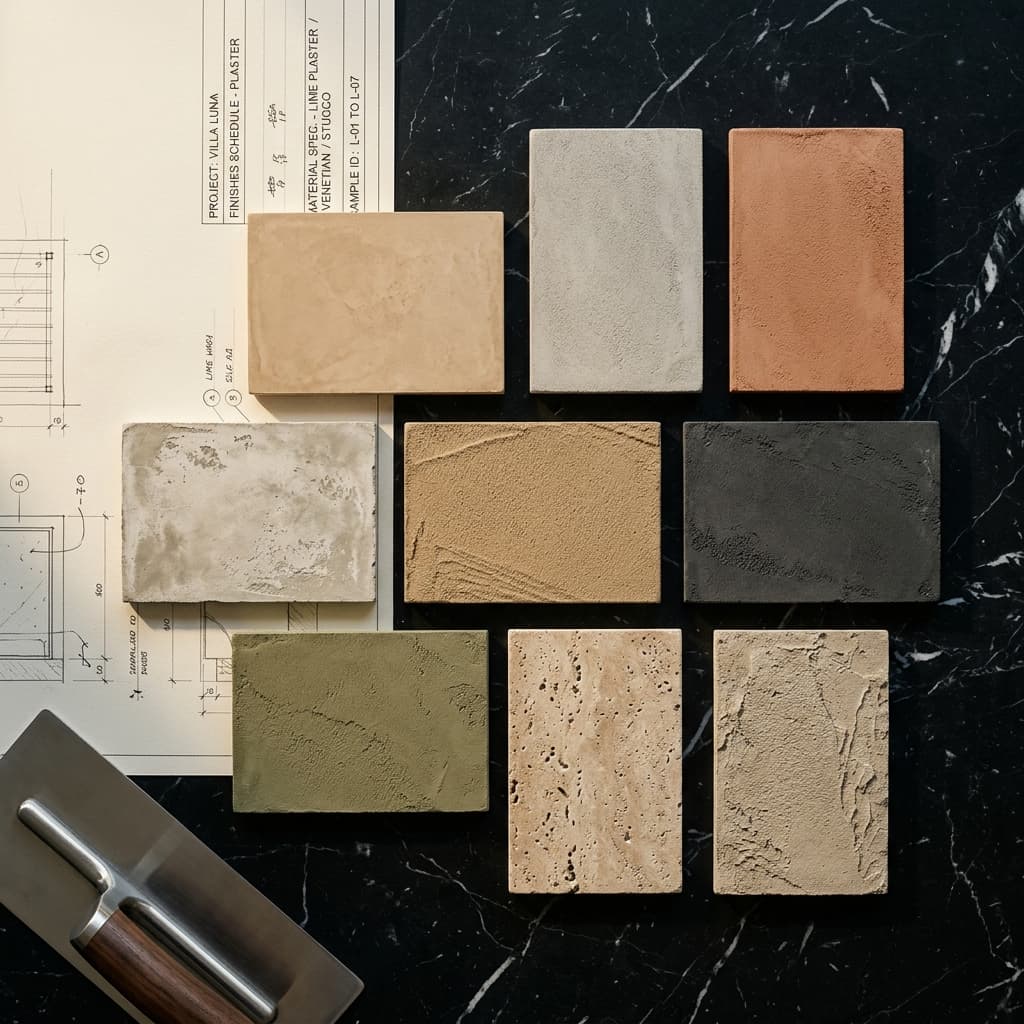
Ask for a sample board in your chosen colour and sheen, then take it into the actual room and assess it properly. Five minutes here prevents the most expensive mistake in the project.
Keep the approved board. It is the reference you measure the finished wall against.
Pricing varies with finish, sheen, substrate condition, and access, but the ranges below reflect skilled application with proper preparation in the South Florida market.
| Finish | Typical installed range | What drives the price |
|---|---|---|
| Venetian plaster | $12–$35+ per sq ft | Sheen level — high-gloss needs more time on the wall and more skill |
| Marmorino | $12–$28 per sq ft | Texture depth and the number of finish layers |
| Lime wash | $6–$14 per sq ft | Coverage, colour depth, and substrate porosity |
| Microcement | $18–$40 per sq ft | Waterproofing system and whether it is floor or wall |
Use the coverage calculator to sanity-check the material volume in a quote against the wall area you actually have. A detailed cost breakdown is in the Venetian plaster cost guide.
Ranges are guidance for evaluating quotes, not a price list. Every project is quoted after a site assessment.
If your project is in Miami-Dade, Broward, or Palm Beach county, we apply the work ourselves and you can put every question above to us directly.
Gian Carlo Sagasti was named a Novacolor Global Ambassador in 2017 — a designation granted to a small number of artisans worldwide who demonstrate exceptional mastery of lime-based finishes.
Over twenty years with lime specifically, and Miami-based since 2015 — more than a decade applying these finishes in South Florida’s humidity and salt air.
Featured as a model for Marmorino Tools Worldwide, in The Way Magazine (“Il re del marmorino”), and on The Aggregate podcast by New Age Artisans. Full credentials are on the studio page.
We are a Miami studio and we do not maintain crews in other cities. We would rather say so than take a job we cannot supervise properly.
Two honest options:
An applicator who tells you they cover every major city is describing a lead-generation network, not a studio. Ask who will be on site.
Every finish below was applied by hand by our own studio, not subcontracted.




A painter applies a coating to a finished surface. An applicator builds the surface itself in thin layers of lime and then burnishes it with a steel trowel to create the sheen. The materials, tools, and skill set are different, and the work cannot be corrected by recoating.
No. There is no state licence specific to decorative plaster and no protected title, which is why terms like “master plasterer” are self-declared. The meaningful credentials are manufacturer training and certification, and documented published work.
Look for at least five years working specifically with lime plaster, not construction or painting in general. Lime has a narrow working window and the judgement required to read it is built through repetition on real projects.
Yes. A sample board in your exact colour and sheen, assessed in the actual room under raking light, is the most reliable way to judge an applicator before committing. An applicator who will not produce one is telling you something.
On plaster this almost always means fewer layers, skipped surface preparation, or an acrylic texture product being sold as lime. Compare the written finish specification — product, coat count, sheen, and sealer — not the headline number.
In the South Florida market, skilled application with proper preparation typically runs $12 to $35+ per square foot, with high-gloss finishes at the upper end. Lime wash is lower, microcement higher.
We work directly across Miami-Dade, Broward, and Palm Beach counties. We do not maintain crews in other cities, though for larger commissions we do travel further — contact us and we will tell you honestly whether it makes sense.
In most cases the paint must be removed or mechanically prepared first, because lime needs a mineral substrate to bond to properly. Anyone offering to go straight over paint without assessing it is cutting the step that most often causes failures.
Either can produce excellent work, but you should be told in advance. Ask specifically who will hold the trowel on your job and who supervises the finish quality if more than one person is applying.
The manufacturer and product line, the number of base and finish coats, the target sheen level, the sealer and whether it is breathable, the surface preparation included, and the repair policy. A quote listing only square footage and a price is not a specification.
Ask for two clients from the last twelve months rather than a general portfolio, and ask those clients how the finish has held up since — particularly in bathrooms and other humid rooms.
Yes, by someone who knows how — it is one of lime’s advantages over paint and wallpaper. Agree the repair terms in writing before work begins rather than after.
If you are in South Florida, we would be glad to answer every question on this page about your specific walls. If you are elsewhere, we will tell you straight whether travelling makes sense for your project.
Call(305) 801-2581
Emailvenetianman@live.com
Studio8900 SW 117 Ave, Suite C208, Miami, FL 33186
Service areaMiami-Dade, Broward, and Palm Beach counties