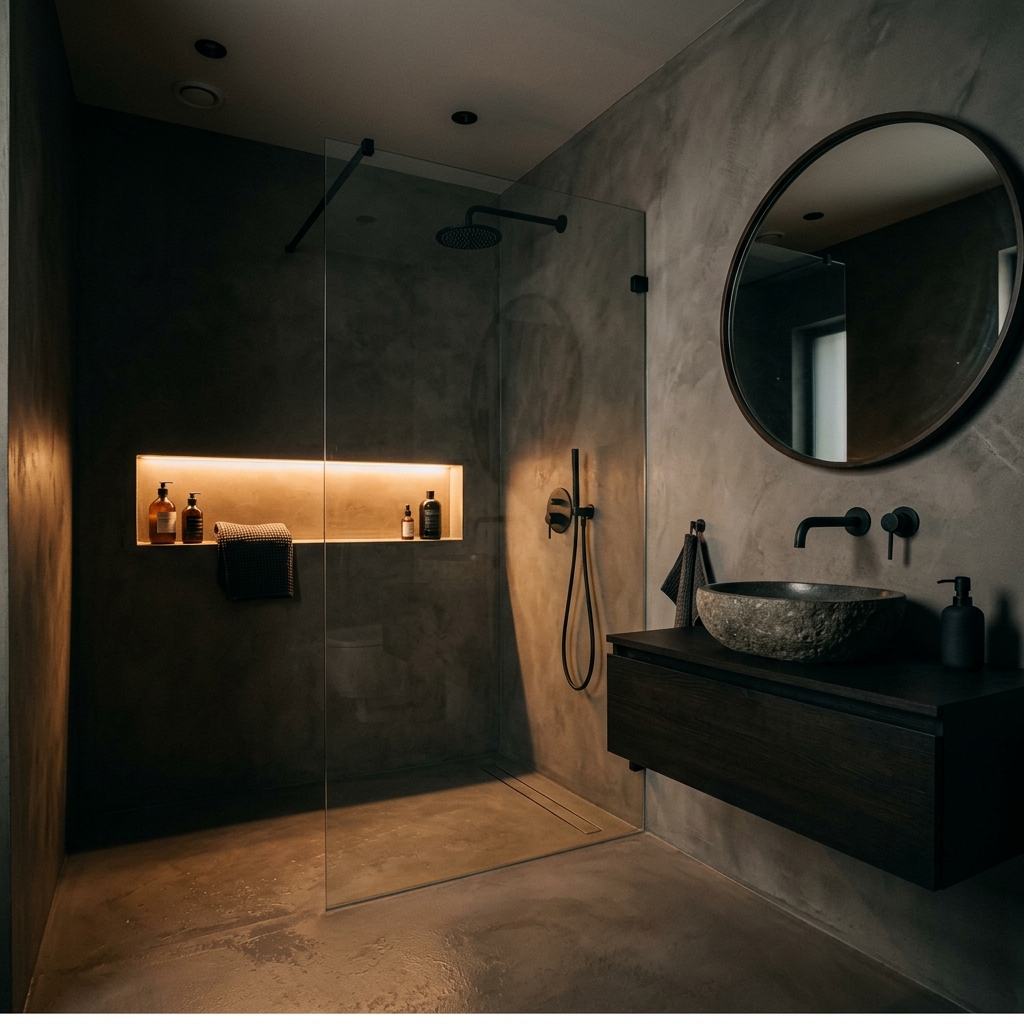
Transforming a bathroom into a monolithic spa environment requires rigorous moisture management and material selection. Lime-based plasters and microcement offer seamless alternatives to traditional tile, eliminating grout lines where mold and mildew breed.
1. Moisture Dynamics in Wet Environments
Lime plasters possess a high pH (12+), making them naturally antimicrobial and resistant to mold growth. However, moisture penetration into unsealed plaster can weaken drywall substrates. Therefore, wetroom application requires a complete system approach:
1. Shower Enclosures & Direct Water Impact: Must use a multi-layer Microcement system over a waterproof liquid membrane (e.g., Laticrete Hydro Ban or Kerdi board).
2. Bathroom Walls & Ceilings: Authentic Grassello di Calce or Marmorino sealed with Marseille soap.
2. Hydrophobic Saponification: Marseille Soap Sealing
The traditional Venetian technique for water-proofing lime plaster involves applying warm Marseille Soap (potassium olivate) over freshly burnished lime plaster. The alkali lime reacts chemically with fatty acids in the olive oil soap, forming an insoluble calcium soap layer (saponification) that sheds water drops while preserving vapor breathability.
3. Step-by-Step Waterproof Microcement Shower Protocol
1. Substrate Prep: Install cementitious backer board with tape & sealed joints.
2. Liquid Waterproof Membrane: Apply 2 coats of liquid elastomeric waterproofing.
3. Microcement Basecoat & Mesh: Embed 4.5 oz alkali mesh into 1.5mm basecoat microcement.
4. Finish Layers: Trowel 2 coats of fine microcement in desired color tone.
5. Polyurethane Topcoat: Apply 2 coats of 2-component matte or satin polyurethane sealer.