Italian Plaster in Miami — Authentic Materials, Master Craftsmanship
Italian plaster refers to a family of traditional lime-based wall finishes that originated in Italy — including Venetian plaster, Marmorino, Grassello di Calce, and Tadelakt. These finishes share the same fundamental materials: aged lime putty, fine marble dust, and natural mineral pigments. They differ in application technique, aggregate size, and final sheen.
In Miami, Italian plaster is prized for its durability, breathability, and timeless beauty. It performs exceptionally well in South Florida’s humid climate — resisting mold, salt air, and the temperature swings that damage conventional finishes.
Exotic Wall Finishes founder Gian Carlo Sagasti is a Novacolor Global Ambassador (2017) and has been working with Italian plasters since 2003. His work has been featured in The Way Magazine, on The Aggregate podcast, and in Marmorino Tools Worldwide training materials.
What Is Italian Plaster?
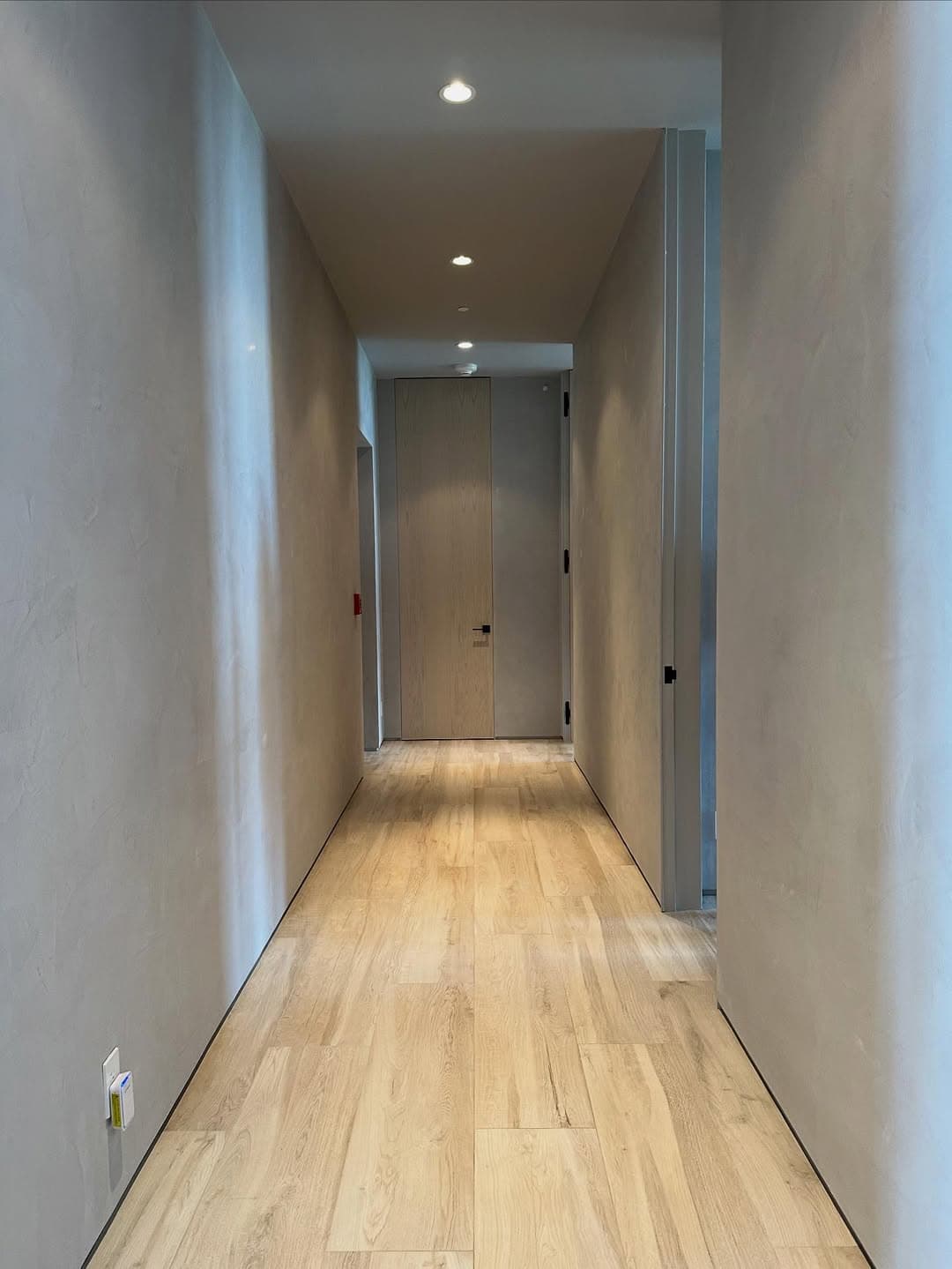
Italian plaster is a broad category of lime-based wall finishes that originated in Italy and have been used in European architecture for centuries. The most common types include:
Venetian Plaster (Intonaco Veneziano)
A polished, marble-like finish burnished to a high-gloss or satin sheen. Reflects light and creates a sense of depth and movement. Learn more about Venetian plaster.
Marmorino
A matte, stone-like finish troweled to create texture. Absorbs light and produces a warm, organic appearance. Learn more about Marmorino.
Grassello di Calce
A high-gloss Italian finish made with a higher proportion of marble dust. Produces a luminous, mirror-like surface.
Tadelakt
A Moroccan-inspired lime finish that is polished and treated with soap to become water-resistant. Often used in bathrooms and wet areas.
All of these finishes share the same fundamental characteristics:
- Composition: Lime putty, marble dust, natural pigments
- Breathability: High — allows moisture vapor to pass through
- Durability: 20+ years with proper care
- Mold resistance: High — alkaline pH prevents growth
- Aesthetic: Timeless, elegant, and impossible to replicate with paint
Why Italian Plaster Works in Miami
Miami’s climate — humid, salt-laden, and hot — is one of the toughest in the United States for interior finishes. Italian plaster performs where paint and wallpaper fail.
Humidity Resistance Through Breathability
Lime is naturally breathable and alkaline. It allows moisture vapor to pass through the wall rather than trapping it inside — critical in Miami, where trapped moisture leads to mold and structural damage.
Mold and Mildew Resistance
Lime’s high pH (12–13) creates an environment where mold and mildew cannot grow. Even in bathrooms, kitchens, and coastal homes, Italian plaster resists the biological growth that plagues painted surfaces.
Salt Air Durability
For homes in Miami Beach, Bal Harbour, Key Biscayne, and other coastal areas, salt air damages paint and metal finishes. Italian plaster is unaffected. Lime and marble are mineral-based — they don’t react to salt.
Seamless Surfaces
No grout lines, no seams, no peeling edges. Italian plaster creates a continuous surface — ideal for modern Miami interiors where clean lines matter.
Timeless Aesthetic
Italian plaster has been used in European architecture for centuries. In Miami, it’s used in:
- Mediterranean Revival homes in Coral Gables and the Roads
- Historic properties in Coconut Grove
- Modern luxury condos in Brickell and Edgewater
- Waterfront estates in Miami Beach and Gables Estates
- Hospitality and commercial interiors throughout South Florida
What Sets Exotic Wall Finishes Apart
Novacolor Global Ambassador (2017)
Gian Carlo Sagasti was named a Novacolor Global Ambassador in 2017 — a designation granted to a small number of artisans worldwide who demonstrate exceptional mastery of lime-based finishes.
Featured in Marmorino Tools Worldwide
Gian Carlo has been featured as a model for Marmorino Tools Worldwide, the Italian manufacturer of professional plastering trowels.
Two Decades of Italian Plaster Experience
Gian Carlo has been working with Italian plasters since 2003 — over 20 years of hands-on experience.
Miami-Based Since 2015
We’ve been applying Italian plasters in South Florida since 2015 — over a decade of experience in Miami’s specific climate.
Our Italian Plaster Process — Step by Step
Step 1 — Consultation and Surface Assessment
We begin with a site visit to assess:
- Substrate type and condition
- Moisture readings and any water intrusion
- Surface flatness and any cracks
- Lighting and how it will interact with the finish
- Room function (living space, bathroom, kitchen, feature wall)
- Desired finish type and color palette
Step 2 — Surface Preparation
- Repair all cracks, holes, and imperfections
- Sand and level the surface
- Prime with an alkali-resistant primer suitable for lime
- Mask and protect adjacent surfaces
Step 3 — Base Coats
We apply 2 to 3 base coats of lime putty. Each coat is troweled on thinly and allowed to cure.
Step 4 — Finish Coats
Depending on the finish type (Venetian, Marmorino, Grassello, or Tadelakt), we apply 2 to 3 thin layers of pigmented plaster. Each layer is troweled and worked to the desired texture and sheen.
Step 5 — Sealing
Once cured, we apply a breathable sealer or natural wax — or in the case of Tadelakt, a soap treatment that makes the surface water-resistant.
Step 6 — Final Inspection
We walk the project with the client, review the finish, and provide written care instructions.
Italian Plaster Applications in Miami
- Feature walls in living rooms, dining rooms, and entryways
- Full-room walls in bedrooms, offices, and lounges
- Ceilings for depth and reflection
- Bathrooms and powder rooms (Tadelakt or sealed Venetian)
- Kitchen walls and backsplashes (with waterproof sealer)
- Restaurant, hotel, and retail interiors
- Columns, archways, and architectural details
- Exterior walls in select applications
Italian Plaster vs. Other Wall Finishes
| Finish | Appearance | Durability | Miami Humidity | Mold Resistance | Cost |
|---|---|---|---|---|---|
| Italian Plaster | Varied — polished to matte | 20+ years | Excellent | High | Moderate–High |
| Venetian Plaster | Polished, marble-like | 20+ years | Excellent | High | Moderate–High |
| Marmorino | Matte, stone-like | 20+ years | Excellent | High | Moderate |
| Lime Wash | Soft, matte, chalky | 5–10 years | Excellent | High | Low–Moderate |
| Microcement | Seamless, industrial | 10–15 years | Excellent (sealed) | High | Moderate–High |
| Paint | Flat, uniform | 3–5 years | Poor | Low | Low |
Project Gallery — Italian Plaster in Miami
Recent Italian plaster projects completed by Exotic Wall Finishes.
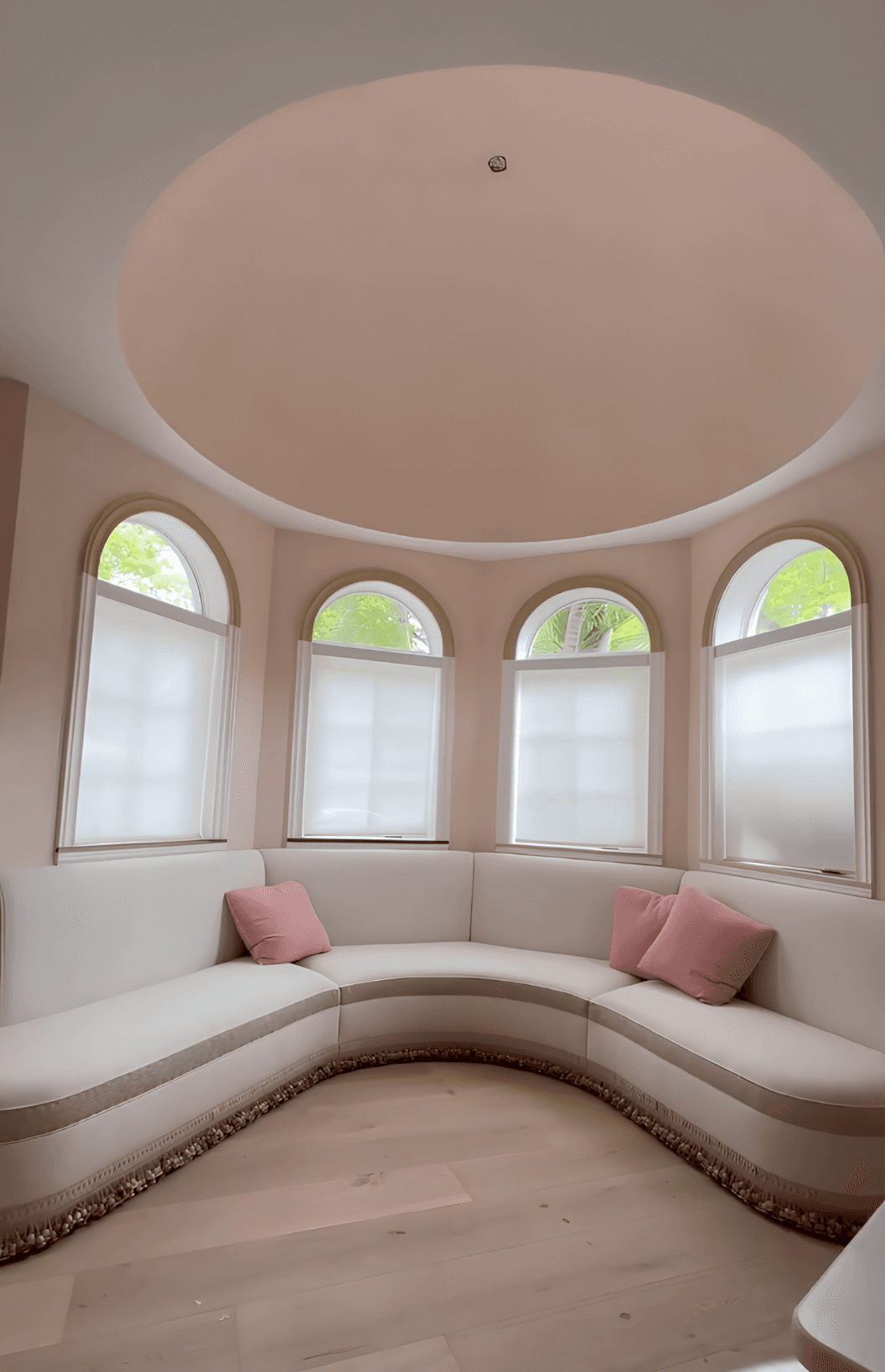
- Coral Gables Estate — Marmorino in a Mediterranean Revival home.
- Coconut Grove Historic Home — Lime finish in a restored 1920s residence.
- Palm Beach Estate — Grassello di Calce in a high-gloss historic interior.
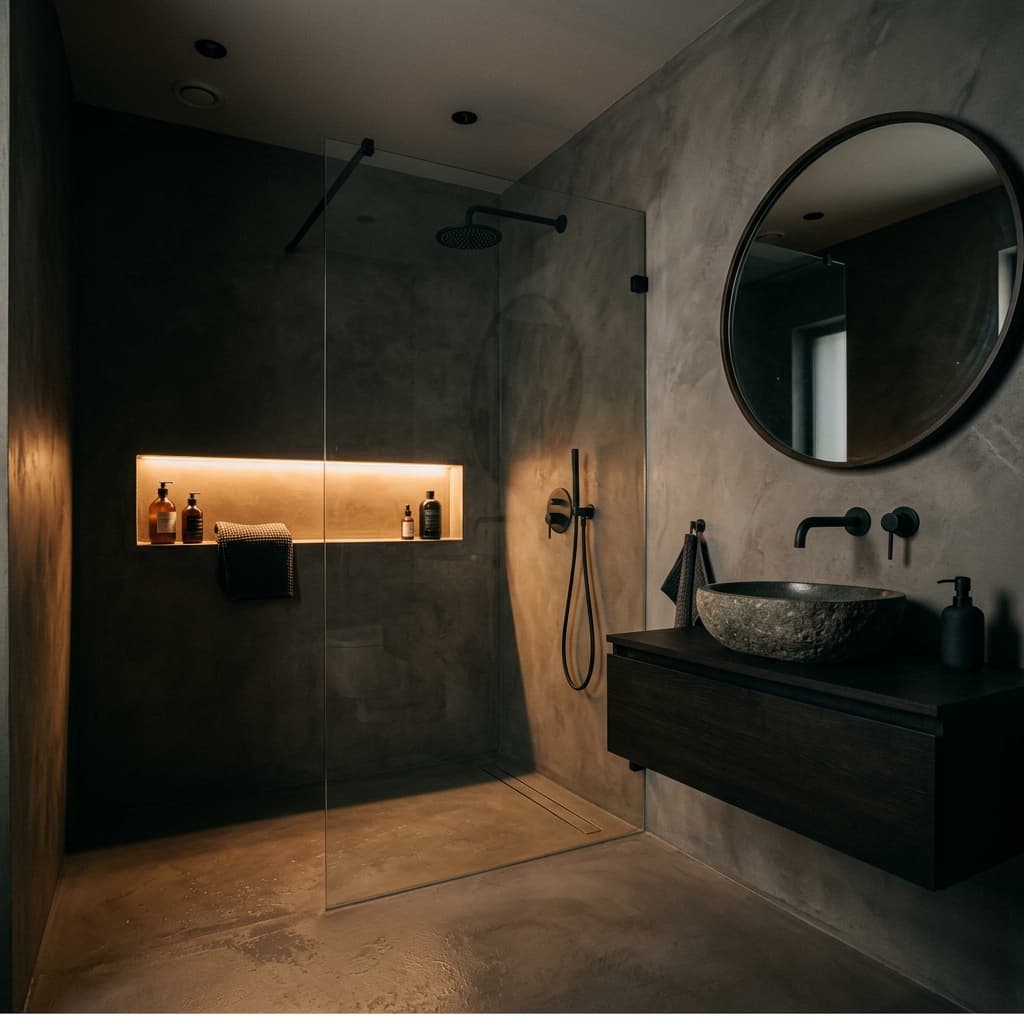
- Miami Beach Master Bath — Venetian plaster bathroom with seamless waterproof finish.


Frequently Asked Questions About Italian Plaster in Miami
What is the difference between Italian plaster and Venetian plaster?
Italian plaster is a broad category that includes Venetian plaster, Marmorino, Grassello, and Tadelakt. Venetian plaster is one type of Italian plaster.
What is the difference between Venetian plaster and Marmorino?
Venetian plaster is burnished to a high-gloss or satin sheen. Marmorino has a matte, stone-like finish. Both are lime-based.
Is Italian plaster waterproof?
No, it’s water-resistant but not waterproof on its own. Tadelakt, however, is a lime finish that becomes water-resistant when treated with soap. In wet areas we also apply a breathable sealer.
How long does Italian plaster last in Miami?
With proper application and care, Italian plaster lasts 20 to 30 years or more.
Can Italian plaster be applied over existing walls?
Yes — as long as the substrate is sound. We regularly apply Italian plaster over drywall, plaster, and concrete.
Can Italian plaster be applied over paint?
In most cases, existing paint must be removed before Italian plaster is applied. Lime needs a mineral substrate to bond properly.
Is Italian plaster mold-resistant?
Yes. Lime’s alkaline pH (12–13) prevents mold and mildew growth.
How do you clean Italian plaster?
Dust weekly with a soft cloth. For marks, use a damp cloth with mild soap. Avoid abrasive cleaners.
Can Italian plaster be repaired?
Yes. Minor scratches can be touched up. Larger repairs require a skilled artisan.
How much does Italian plaster cost in Miami?
Pricing depends on finish type, wall size, and prep. As a general reference, Italian plaster ranges from $10 to $35+ per square foot installed.
Do you work outside of Miami?
We serve Miami-Dade, Broward, and Palm Beach counties. For larger projects, we can travel further.
How long does an Italian plaster project take?
A feature wall takes 2–3 days. A full room takes 3–5 days. High-gloss finishes and larger projects take longer.
Do you offer color matching?
Yes. We work with mineral pigments and can match existing colors or develop custom shades. Sample boards are provided before installation.
Commission Your Italian Plaster Project in Miami
Ready to elevate your home or commercial space with authentic Italian plaster? We’d love to hear about your project.
What to have ready:
- The rooms or walls you’re considering
- Approximate square footage
- Preferred finish type (Venetian, Marmorino, Grassello, Tadelakt)
- Color direction or inspiration images
- Timeline expectations
Call: (305) 801-2581
Email: venetianman@live.com
Studio: 8900 SW 117 Ave, Suite C208, Miami, FL 33186
Service area: Miami-Dade, Broward, and Palm Beach counties