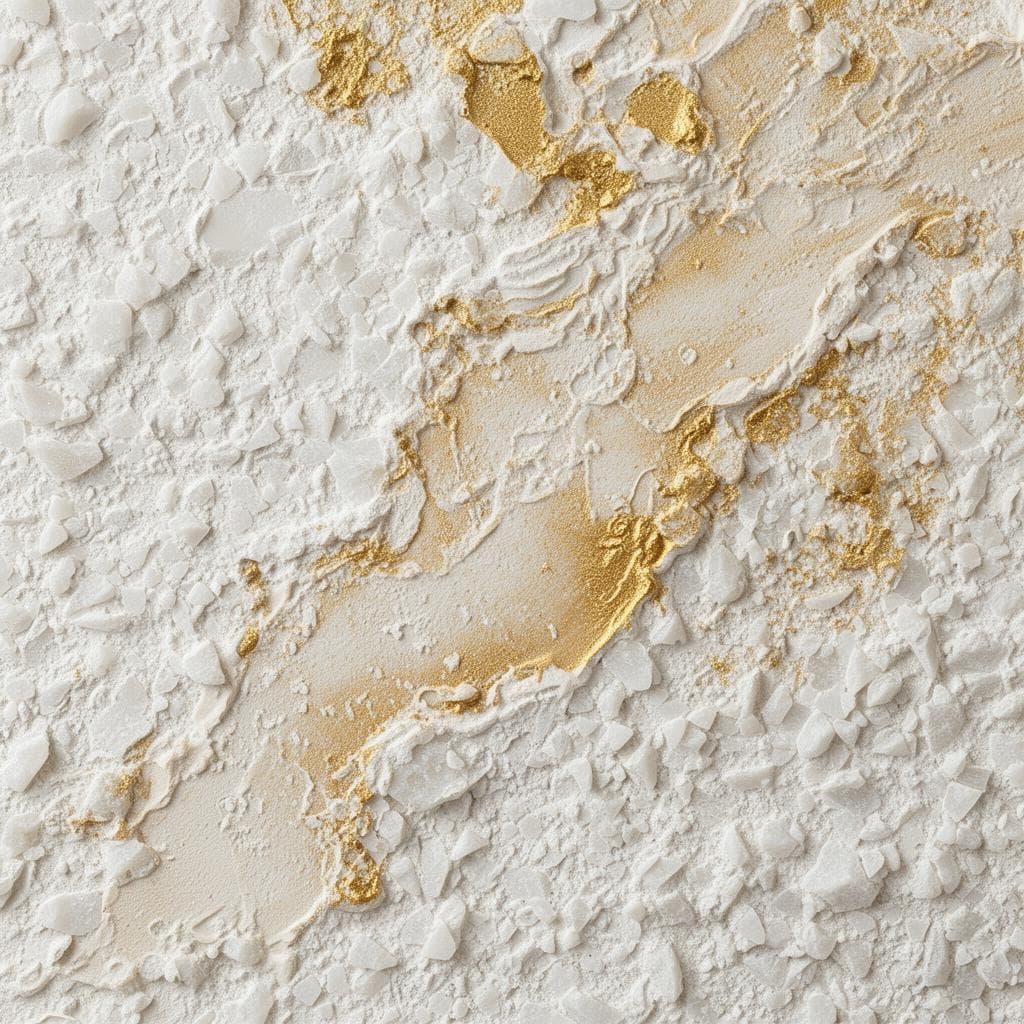
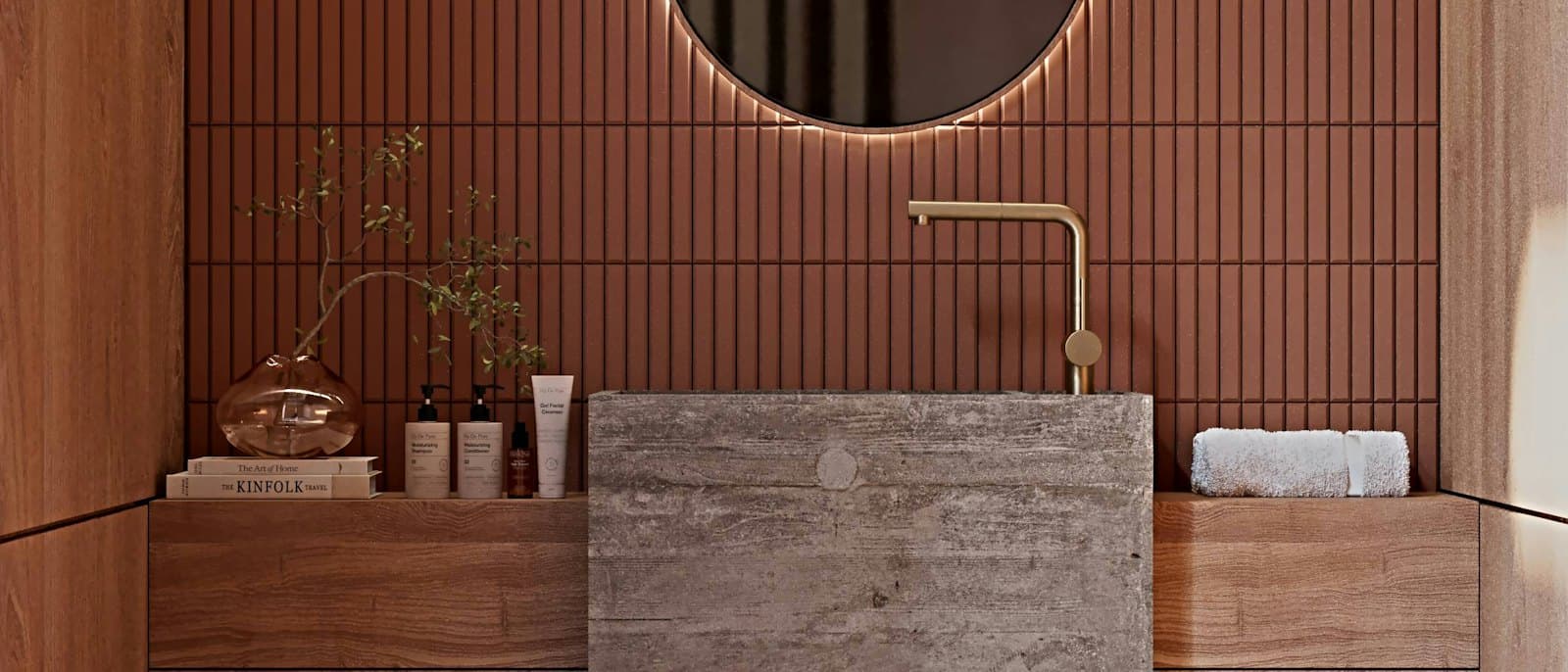
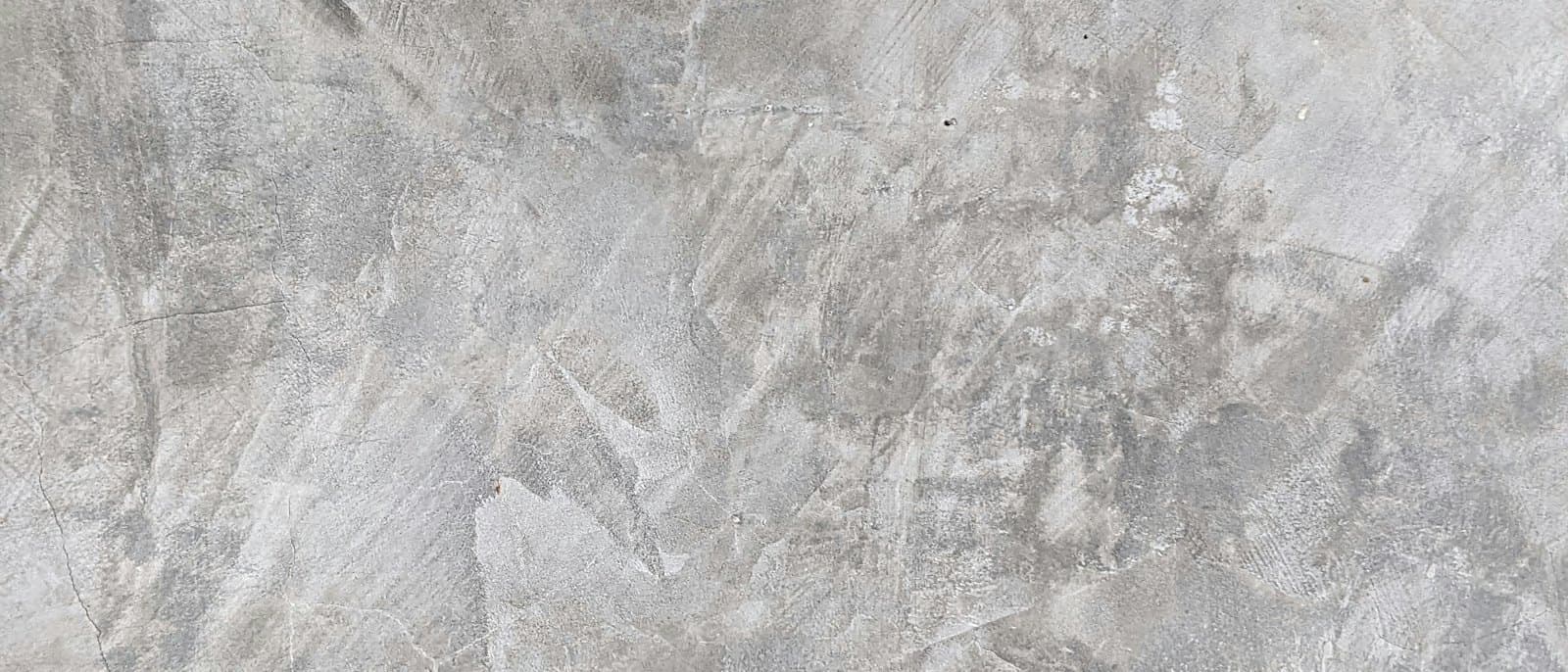
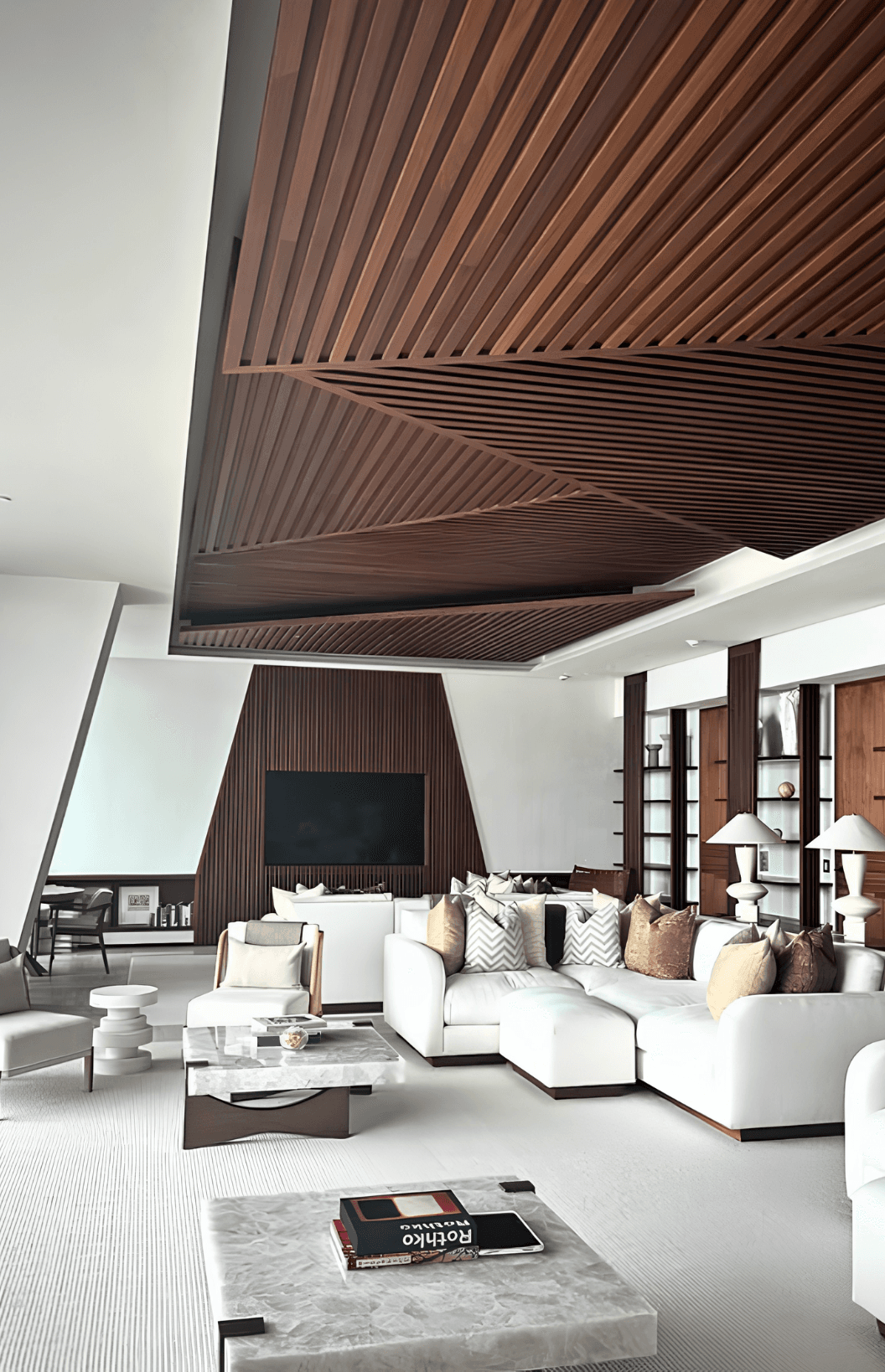
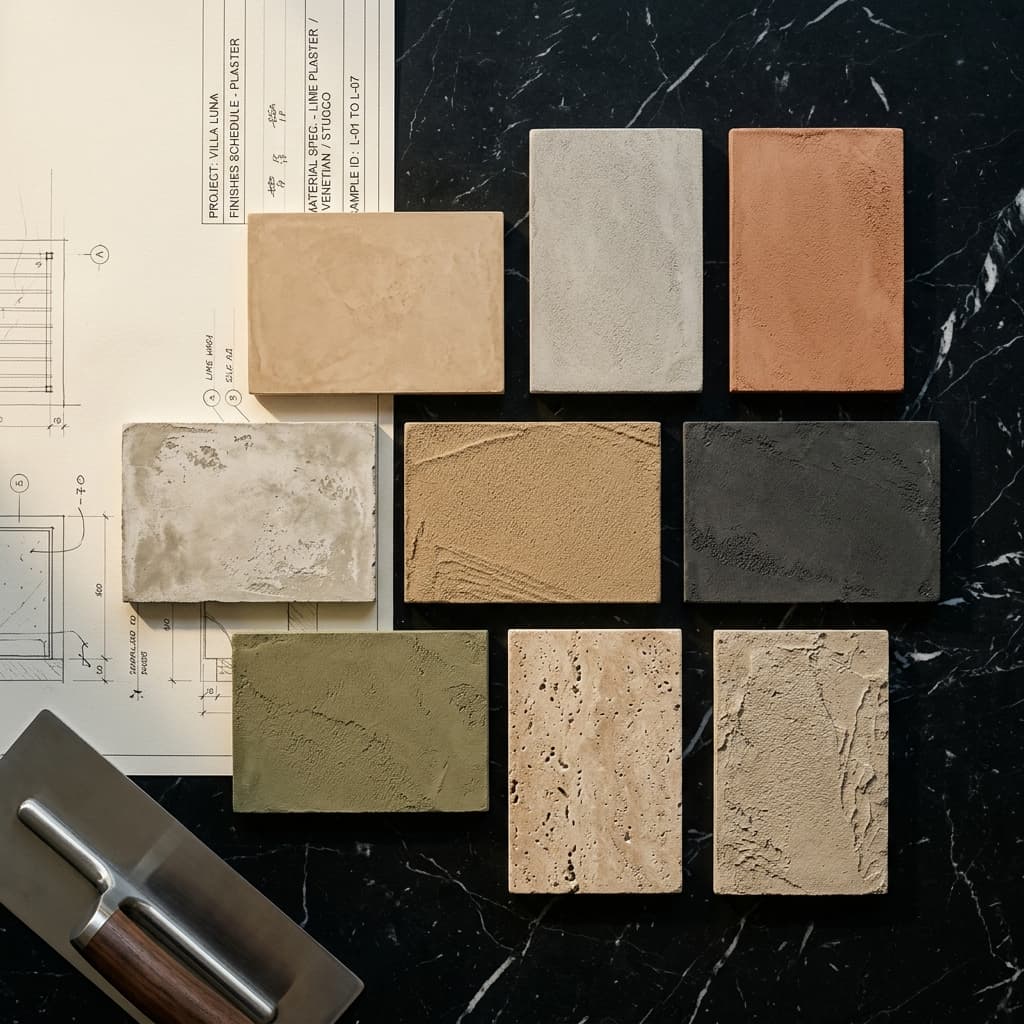
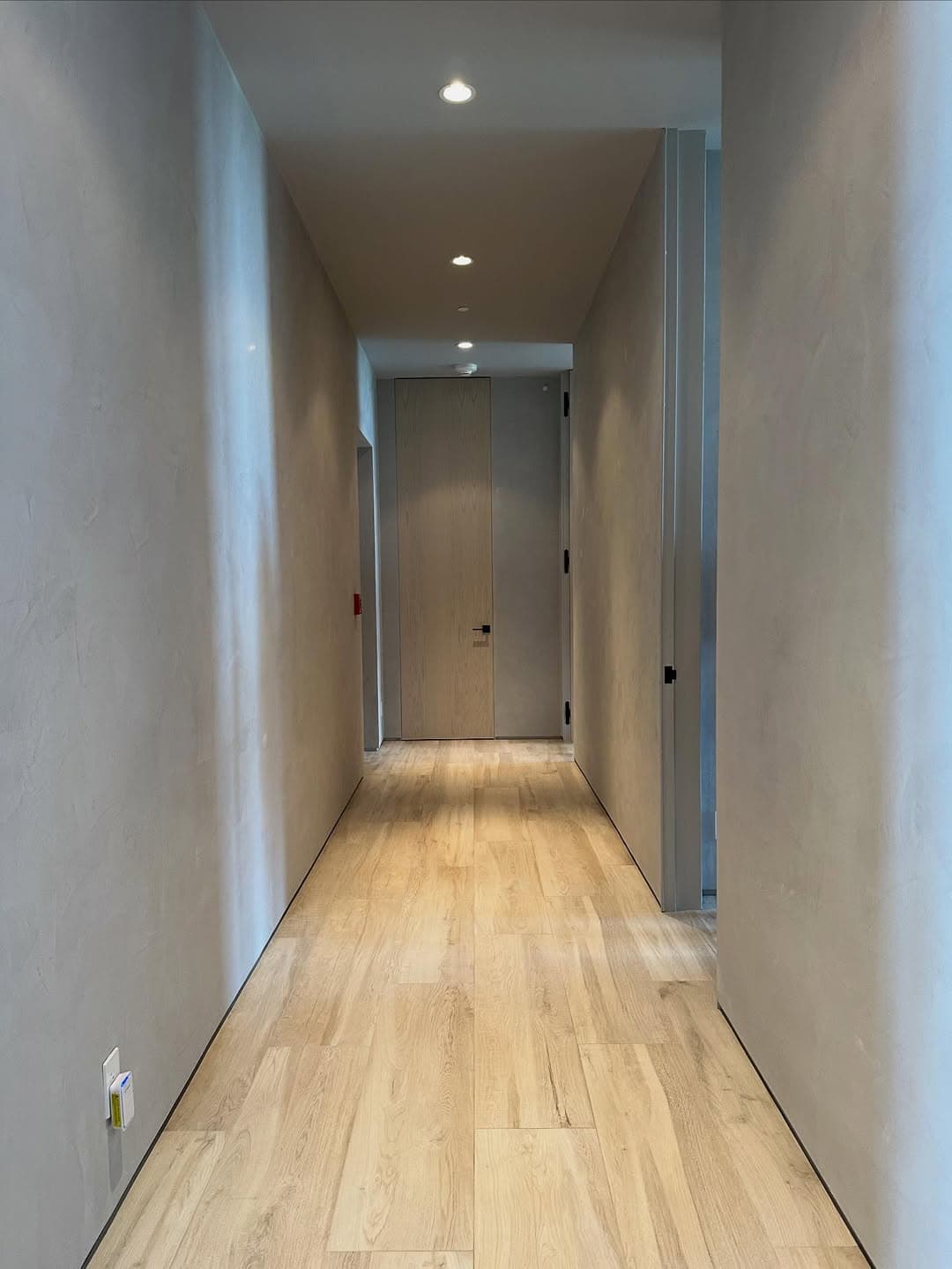
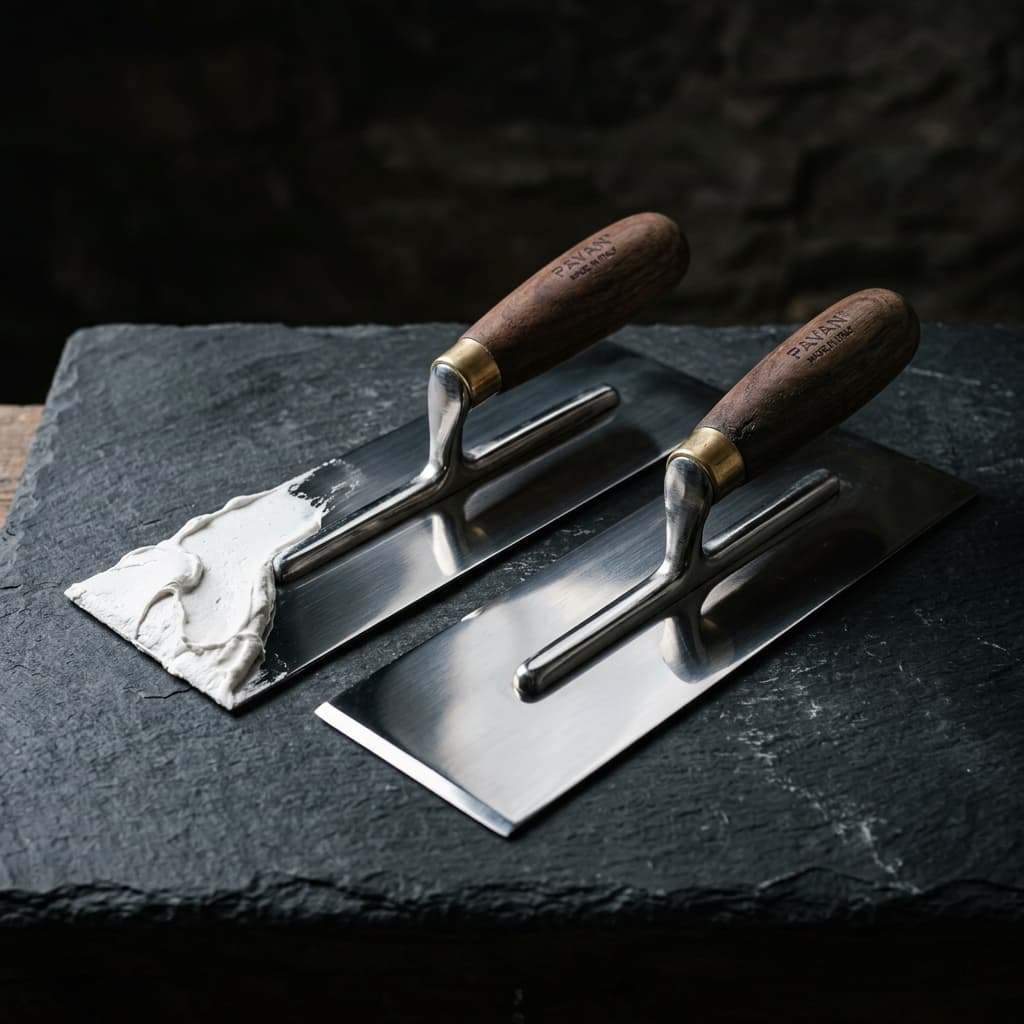
Marmorino is a lime-based plaster made from aged lime putty and fine marble dust, applied in multiple thin layers and finished with a steel trowel to create a matte, textured surface. The name comes from the Italian word marmo (marble), reflecting the finish’s stone-like appearance.
Historically, Marmorino was used in Venetian villas and palazzi as a durable, breathable wall finish that could withstand humidity from the nearby lagoons. It was applied over masonry and lime plaster, and it aged gracefully — developing a natural patina that many designers seek to replicate today.
Modern Marmorino is available in a wide range of natural pigments and can be finished at different levels of smoothness, from nearly flat to deeply textured. What remains constant is its matte finish, its breathability, and its mineral composition.
Key Characteristics of Marmorino
- Finish: Matte, stone-like, warm
- Texture: Can be smooth, lightly textured, or deeply troweled
- Depth: Absorbs light rather than reflecting it
- Composition: Lime putty, marble dust, natural pigments
- Breathability: High — allows moisture vapor to pass through
- Durability: 20+ years with proper care
- Mold resistance: High — alkaline pH inhibits growth
Marmorino vs. Venetian Plaster
This is the most common question we hear. Both are lime-based Italian plasters, and both are breathable, durable, and beautiful. The difference is in the finish:
- Venetian plaster is burnished to a high-gloss or satin sheen. It reflects light and looks like polished marble.
- Marmorino is troweled to a matte finish. It absorbs light and looks like natural stone.
Venetian plaster is often used for feature walls, ceilings, and formal spaces. Marmorino is often used for whole rooms — kitchens, bathrooms, bedrooms — where a softer, more restrained finish is desired.
We frequently install both in the same home. A common approach is Venetian plaster in the living and dining rooms, and Marmorino in the kitchen and primary suite. Read our full Marmorino vs Venetian plaster guide for a side-by-side comparison.