Microcement in Miami — Seamless, Modern, Durable
Microcement is a modern, cement-based coating that creates a seamless, industrial-chic surface for walls, floors, and ceilings. Unlike tile or stone, microcement has no grout lines and can be applied directly over existing surfaces — including tile, concrete, and drywall. In Miami, it has become the finish of choice for contemporary interiors, luxury condos, and modern bathrooms where clean lines and durability matter most.
Exotic Wall Finishes has been applying microcement in Miami since 2015. Our founder, Gian Carlo Sagasti, is a Novacolor Global Ambassador (2017) and has been working with decorative finishes since 2003.
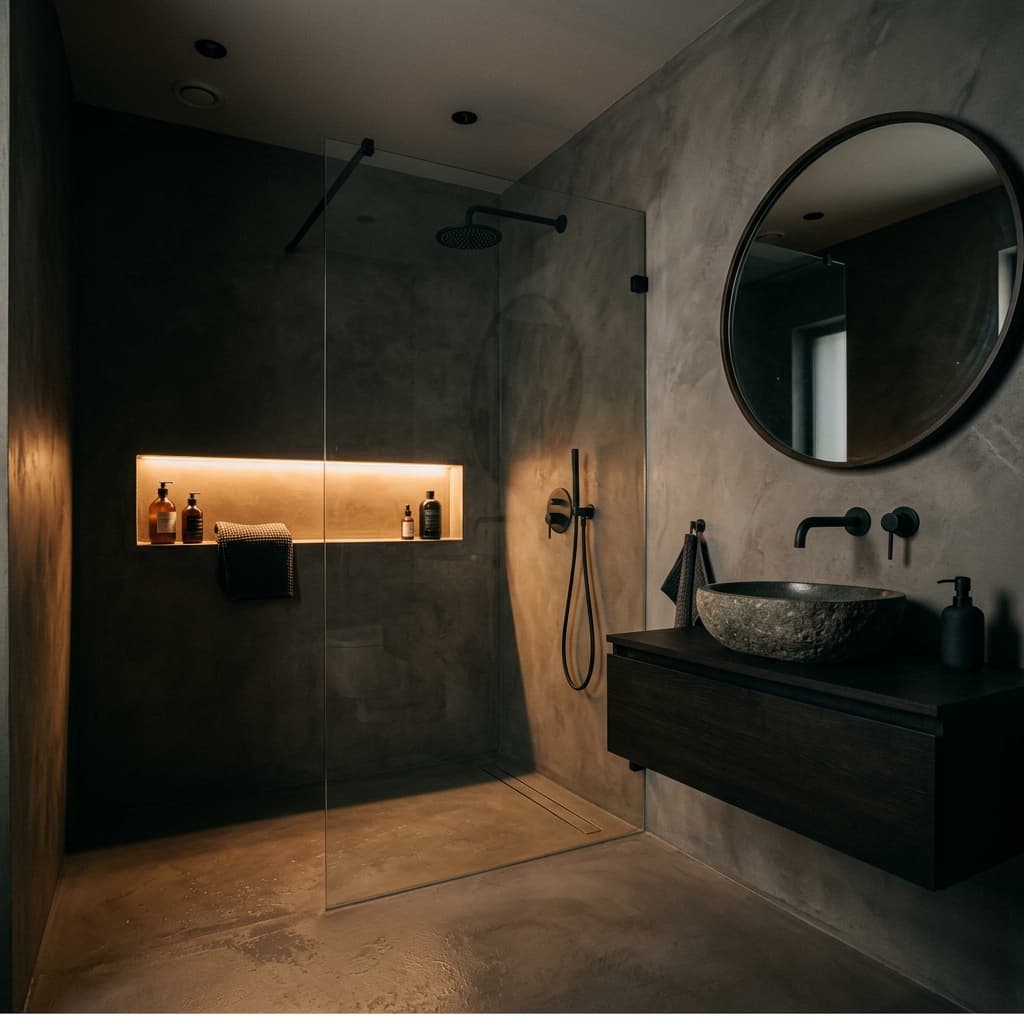
What Is Microcement?
Microcement is a polymer-modified cement coating applied in thin layers — usually 2 to 3 millimeters thick. It bonds to most substrates, including tile, concrete, drywall, and existing plaster. The finish can be smooth or textured, matte or satin, and is typically sealed with a waterproof topcoat for durability.
Unlike traditional cement or concrete, microcement is flexible, thin, and can be applied to vertical surfaces without the weight or thickness of poured concrete. It’s also troweled by hand — meaning every installation is unique.
Key Characteristics
- Finish: Seamless, industrial, modern
- Composition: Cement, polymers, fine aggregates, pigments
- Thickness: 2–3 mm
- Application: Walls, floors, ceilings, bathrooms, kitchens, countertops
- Durability: Resistant to water, stains, and wear when sealed
- Maintenance: Easy — no grout lines to clean
- Longevity: 10–15 years with proper care
What Microcement Is Not
- It is not poured concrete. It’s a thin coating, not a structural slab.
- It is not tile. It has no grout, no seams, and no edges.
- It is not a DIY product. Microcement requires a skilled applicator to achieve a seamless result.
Microcement vs. Polished Concrete
Polished concrete is poured, cured, ground, and polished — a thick, structural surface. Microcement is a thin overlay applied to an existing substrate. Microcement is more versatile (walls, ceilings, countertops), warmer underfoot, and can be applied in existing spaces without demolition.
Why Microcement Works in Miami
Miami’s climate is challenging for most finishes. Humidity, salt air, and temperature swings damage paint, warp wood, and stain natural stone. Microcement performs differently — because it’s cement-based, sealed, and seamless.
Humidity and Water Resistance
Microcement is naturally water-resistant, and when sealed with a waterproof topcoat, it becomes fully waterproof. This makes it ideal for bathrooms, kitchens, laundry rooms, and coastal properties where moisture is constant.
Seamless Surfaces — No Grout, No Mold
Tile grout is one of the most common places for mold to grow in Miami bathrooms. Microcement eliminates grout entirely. There are no seams, no joints, and no porous lines where moisture can accumulate. The result is a cleaner, more hygienic surface.
Durability in High-Traffic Spaces
Microcement is harder than tile, more resistant to scratches than paint, and doesn’t chip like stone. In high-traffic areas — entryways, kitchens, retail spaces, restaurants — microcement holds up far longer than most alternatives.
Modern Aesthetic for Miami’s Contemporary Interiors
Miami’s luxury condos in Brickell, Edgewater, and Downtown have embraced microcement for its clean, industrial-chic appearance. It works equally well in modern minimalist interiors, lofts, and contemporary bathrooms.
Versatile Applications
Microcement can be applied to:
- Walls in living rooms, bedrooms, and feature spaces
- Floors in living areas, bathrooms, and kitchens
- Ceilings for a continuous, monolithic look
- Bathrooms — floors, walls, and shower surrounds
- Kitchens — backsplashes, islands, and countertops
- Stairs, columns, and architectural details
What Sets Exotic Wall Finishes Apart
Novacolor Global Ambassador (2017)
Gian Carlo Sagasti was named a Novacolor Global Ambassador in 2017 — a designation granted to a small number of artisans worldwide. Novacolor produces some of the finest microcement and lime-based products in Italy.
Two Decades of Decorative Finish Experience
Gian Carlo has been working with decorative finishes since 2003 — over 20 years of hands-on experience. His work has been featured in The Way Magazine, on The Aggregate podcast, and in Marmorino Tools Worldwide training materials.
Miami-Based Since 2015
We’ve been operating in Miami-Dade, Broward, and Palm Beach counties for over a decade, applying microcement in South Florida’s specific climate.
Our Microcement Process — Step by Step
Step 1 — Consultation and Surface Assessment
Every project begins with a site visit to assess:
- Substrate type (tile, concrete, drywall, existing plaster)
- Surface condition and any repairs needed
- Whether the substrate is suitable for direct application
- Room function (wet area, high-traffic, decorative)
- Desired finish (matte, satin, textured)
- Color and design direction
We provide a written proposal with specification, timeline, and surface preparation required.
Step 2 — Surface Preparation
Preparation determines the longevity of a microcement installation.
- Repair all cracks, holes, and imperfections
- Grind or sand the substrate to create a bonding profile
- Prime with a suitable bonding primer
- Reinforce with fiber mesh in high-stress areas if needed
- Mask and protect adjacent surfaces
Step 3 — Base Coats
We apply 2 to 3 base coats of microcement, each troweled on thinly and allowed to cure. Base coats build the foundation and create an even surface.
Step 4 — Finish Coats
We apply 2 to 3 thin finish coats of pigmented microcement. Each layer is sanded and smoothed between coats to achieve the desired texture and sheen. This is where the seamless quality of microcement emerges.
Step 5 — Sealing
Sealing is critical for microcement. We apply:
- Waterproof sealer in wet areas (bathrooms, kitchens, showers)
- Protective topcoat for durability in high-traffic areas
- Anti-slip additive for floors if desired
Step 6 — Final Inspection
We walk the project with the client, review the finish under natural and artificial light, and provide written care instructions.
Microcement Applications in Miami
- Bathrooms — floors, walls, showers, vanities
- Kitchens — backsplashes, islands, countertops
- Living areas — floors, feature walls
- Bedrooms — walls, feature walls
- Ceilings — continuous surfaces
- Stairs and columns
- Retail and restaurant interiors
- Commercial spaces requiring low maintenance
Microcement vs. Other Finishes
| Finish | Seams | Durability | Water Resistance | Maintenance | Aesthetic |
|---|---|---|---|---|---|
| Microcement | None | High (10–15 yrs) | Excellent (sealed) | Easy | Modern, seamless |
| Tile | Grout lines | High (20+ yrs) | Good | Grout cleaning | Traditional |
| Polished Concrete | None | High | Moderate | Sealing | Industrial |
| Paint | None | Low (3–5 yrs) | Poor | Repainting | Flat |
| Wallpaper | Seams | Low | Poor | Delicate | Patterned |
See the full Venetian plaster vs microcement vs lime wash comparison for a specification-level breakdown.
Project Gallery — Microcement in Miami
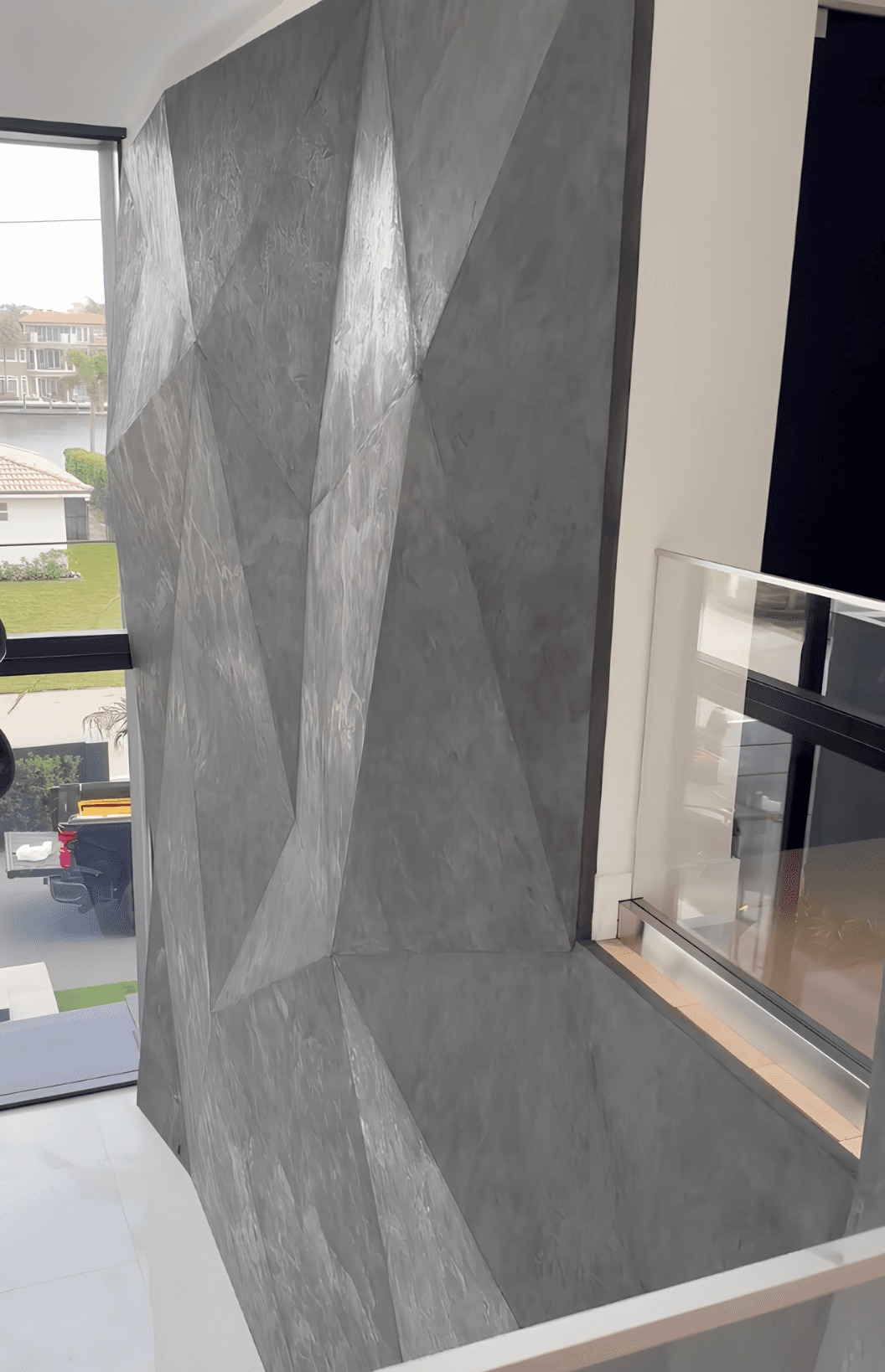
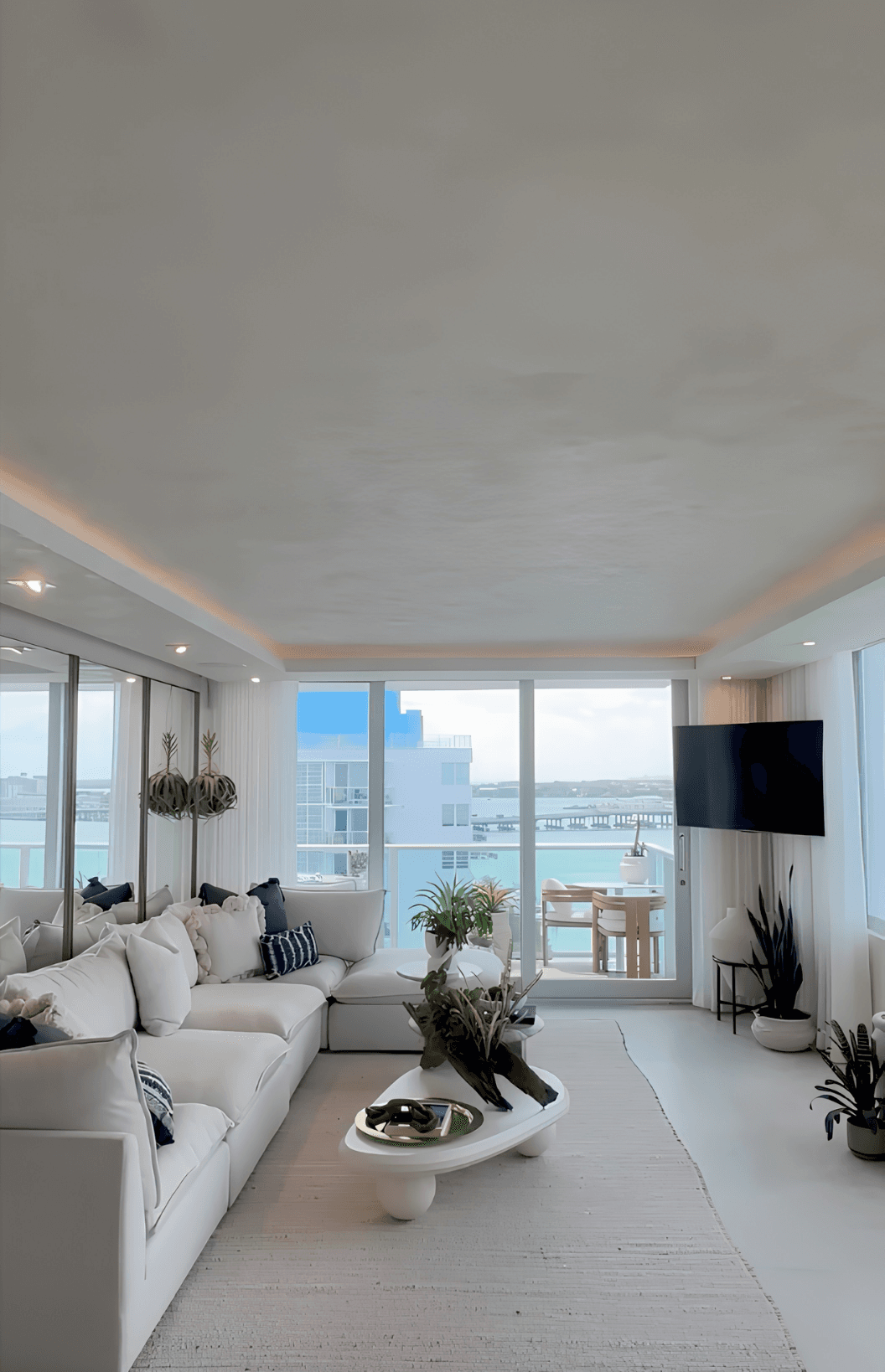
Recent microcement projects completed by Exotic Wall Finishes.
- Brickell Penthouse — Microcement flooring in a modern high-rise.
- Miami Beach Residence — Microcement bathroom with seamless shower surround.
- Edgewater / Aventura Condo — Microcement feature wall in living area.
- Wynwood Restaurant — Microcement walls and bar in a commercial space.
Frequently Asked Questions About Microcement in Miami
Is microcement waterproof?
With a proper waterproof sealer, yes. Microcement is ideal for bathrooms, showers, kitchens, and coastal properties.
How long does microcement last in Miami?
With proper care, microcement lasts 10 to 15 years or more, even in Miami’s humid climate.
Can microcement be applied over tile?
Yes — as long as the tile is sound and properly prepared. Microcement is commonly used to cover outdated tile without demolition.
Is microcement suitable for floors?
Yes. Microcement is excellent for floors. It’s durable, seamless, easy to clean, and can be finished with an anti-slip additive if desired.
Is microcement flooring slippery?
Microcement can be finished with a matte or satin sealer that provides traction. We can also add anti-slip additives for bathrooms, kitchens, and outdoor areas.
Can microcement be used in a shower?
Yes — with proper waterproofing. We install a waterproof membrane beneath the microcement and seal it with a waterproof topcoat.
How do you clean microcement?
Use a damp cloth or mop with mild soap. Avoid abrasive cleaners and scouring pads.
Can microcement be repaired if damaged?
Yes. Minor scratches can be touched up. Larger repairs require a skilled applicator to blend new material into the existing finish.
How much does microcement cost in Miami?
Pricing depends on surface, area, preparation, and sealing requirements. As a general reference, microcement typically ranges from $15 to $35+ per square foot installed. We provide project-specific quotes.
Do you work outside of Miami?
We serve Miami-Dade, Broward, and Palm Beach counties, including Brickell, Miami Beach, Coral Gables, Coconut Grove, Aventura, Boca Raton, and Palm Beach.
How long does a microcement project take?
A typical bathroom takes 4–6 days. A full floor takes 5–7 days. Larger projects may take longer.
Do you offer color matching?
Yes. Microcement can be pigmented to match nearly any color. Sample boards are provided before installation.
Commission Your Microcement Project in Miami
Ready to elevate your space with microcement? We’d love to hear about your project.
What to have ready:
- The surfaces you’re considering (walls, floors, ceilings, bathrooms, kitchens)
- Approximate square footage
- Interior or exterior application
- Color and finish direction
- Timeline expectations
Call: (305) 801-2581
Email: venetianman@live.com
Studio: 8900 SW 117 Ave, Suite C208, Miami, FL 33186
Service area: Miami-Dade, Broward, and Palm Beach counties