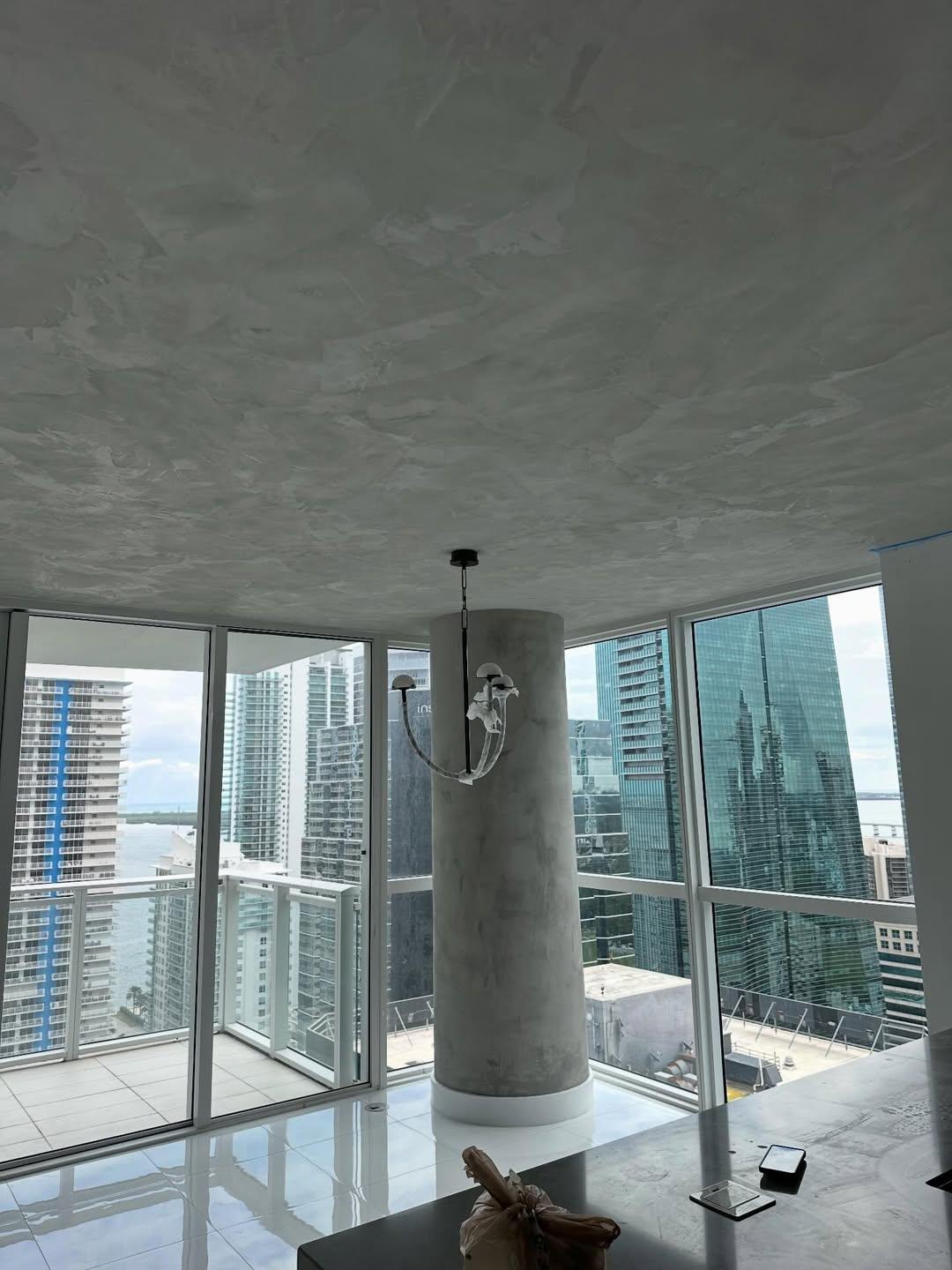
A plaster project in a single-family home starts when the crew arrives. A plaster project in a Miami condo starts weeks earlier, with the building. Management offices, association rules, elevator bookings, working hours and sometimes a permit all sit between you and a finished wall.
None of it is difficult if you plan for it. Here is what to expect, based on how high-rise projects in Brickell, Miami Beach, Aventura and downtown Miami typically run.
Step 1: Read Your Association's Rules First
Florida condominiums are governed by Chapter 718 of the Florida Statutes and by each building's own declaration, bylaws and rules. Section 718.113 deals with alterations to common elements, which generally require approval in the way the declaration sets out. The walls inside your unit are usually your responsibility, but most associations still require an alteration or renovation application for interior work, and their rules decide how and when contractors can operate in the building.
Ask the management office for the current renovation package. Requirements vary by building, but commonly include:
- An alteration or renovation application describing the work.
- The contractor's certificate of insurance, often naming the association and management company as additional insureds.
- A refundable damage deposit.
- Service elevator reservations and a protected route for materials.
- Approved working hours, which are often stricter than city rules.
- A contractor parking and sign-in procedure.
Some buildings also restrict noisy renovation work during peak winter season or around holidays. Ask before you set dates.
Step 2: Find Out Whether a Permit Applies
For a pure decorative finish over existing, sound walls, a building permit is often not required, but the rules depend on the municipality and on everything else in the scope.
- Unincorporated Miami-Dade County lists interior painting and other interior surface treatments among work that does not need a permit under the Florida Building Code.
- The City of Miami lists painting, including decorative finishes, as exempt, with a clear caveat: if the work affects the stucco, a permit is required.
- The City of Miami Beach publishes a separate permit checklist for condominium interior alterations (non-structural), and its list of exempt minor repairs does not specifically mention plaster finishes.
Scope matters more than the plaster itself. Replacing drywall, moving walls, electrical work, plumbing, or waterproofing a shower can all bring a project into permit territory even when the finish alone would not. Confirm with your city's building department and your management office before work starts; a reputable contractor will help you check.
Step 3: Plan Around Working Hours
Each city sets limits on construction noise, and buildings usually set tighter ones. In the City of Miami Beach, for example, construction noise in residential zones is permitted 8:00 a.m. to 6:00 p.m. on weekdays and 10:00 a.m. to 4:00 p.m. on Saturdays, with no construction noise on Sundays or national holidays.
The good news: plastering itself is quiet. Troweling and burnishing make far less noise than demolition or tile removal. The loudest and dustiest phase is usually sanding the skim coat during preparation, which is where building rules about noise and dust matter most.
Step 4: Know What Your Walls Are Made Of
Miami high-rises have their own substrates:
- Poured concrete columns, ceilings and exterior walls. Concrete is an excellent base for lime once it is clean, dry and free of form oils.
- Drywall partition walls, often with orange-peel or knockdown texture that needs a Level 5 skim coat before polished plaster.
- Textured or popcorn ceilings in older buildings. Test them for asbestos before anyone sands or scrapes. Miami Beach's condo checklist, for instance, calls for an asbestos survey on renovations disturbing more than 160 square feet of suspect friable material.
Our substrate guide covers each surface in detail.
Step 5: Protect the Unit and the Building
Lime is caustic while wet, and condo finishes are expensive. Expect your installer to:
- Cover floors with breathable protection and tape off glass, frames and fixtures.
- Protect the elevator and hallway route as the building requires.
- Use dust-controlled sanding during preparation.
- Keep the air conditioning running at steady settings, without vents blasting directly onto fresh plaster, so the lime cures evenly in Miami humidity.
A Realistic Timeline
| Phase | Typical Duration | What Happens |
|---|---|---|
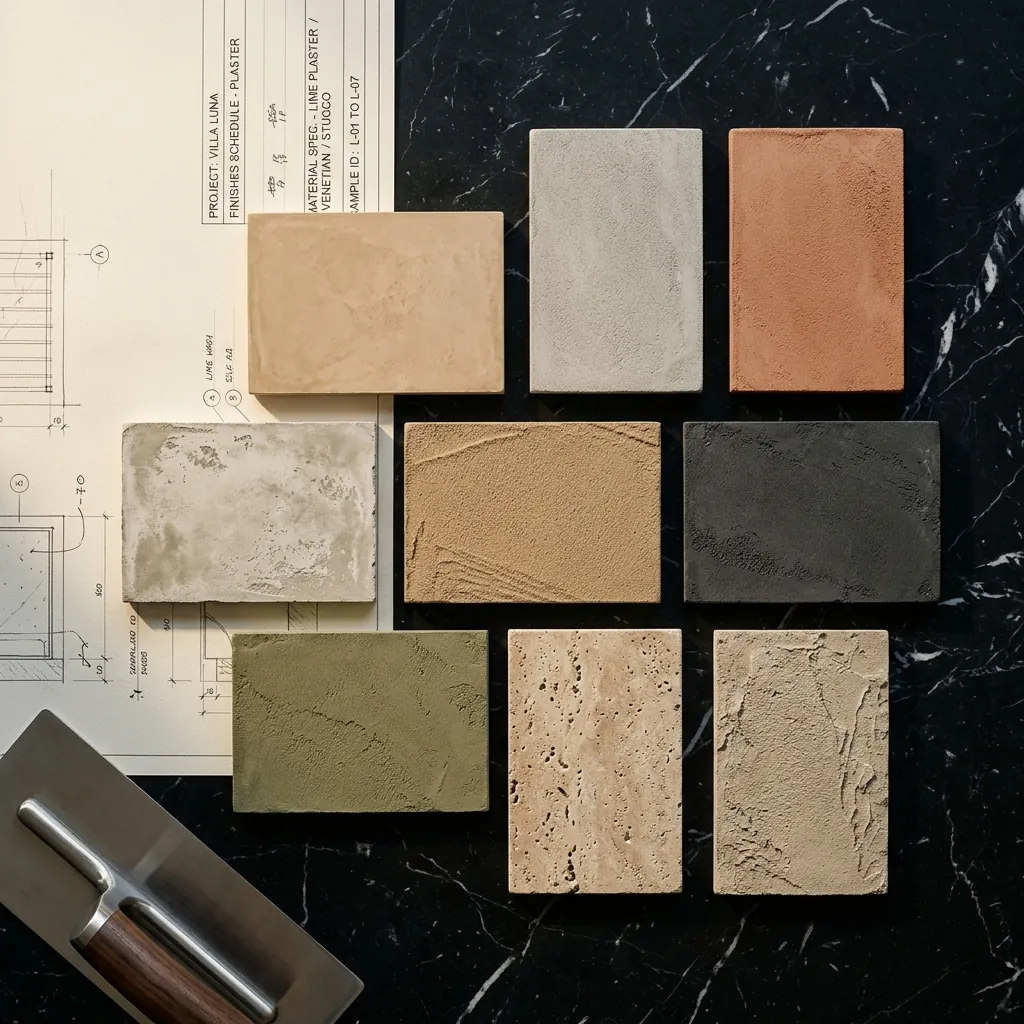
| Design and samples | 1–2 weeks | Finish, color and sheen chosen from real samples |
| Association approval | 1–4 weeks | Application, insurance certificate, deposit, scheduling |
| Protection and preparation | 1–3 days | Masking, repairs, Level 5 skim coat, sanding |
| Priming | About 1 day | Quartz primer, allowed to dry before plaster |
| Plaster coats and burnishing | 2–5 days | A feature wall takes about 2–3 days; a full room 3–5 |
| Sealing | After about 48 hours of curing | Wax or Marseille soap applied and buffed |
| Final cleanup and walkthrough | Same day as sealing | Protection removed, building notified |
Approval time is the biggest variable. Start the paperwork while you are still choosing colors.
Seasonal Planning in South Florida
- Hurricane season runs from June 1 to November 30. When a storm threatens, buildings may close elevators to contractors and lock down common areas. Leave slack in summer and fall schedules.
- Peak winter season brings full buildings, busy elevators and, in some associations, tighter renovation rules.
- Humidity is highest in summer. Lime cures well in an air-conditioned unit, but very humid conditions slow drying between coats, which can add a day.
Condo Project Checklist
- Get the building's current renovation package and rules.
- Confirm working hours, elevator booking and any seasonal restrictions.
- Check with your city's building department whether your full scope needs a permit.
- Test any textured ceilings in older buildings for asbestos.
- Approve color and sheen from dry samples, viewed in your own light.
- Submit the contractor's insurance certificate and deposit.
- Book the elevator for delivery and removal days.
- Plan to stay off fresh walls and keep the unit cool and steady during curing.
We work regularly in high-rise buildings across Brickell, Miami Beach and Aventura. See our Aventura condo microcement feature wall and Brickell penthouse project for examples, or start a project inquiry and we will walk you through your building's requirements.